
REVIEW · CATANIA
Etna: Trekking to the summit craters at 3340 meters
Mount Etna gives you a rare chance to walk beside an active volcano at serious altitude. You ride above the tree line, cross black lava and loose volcanic lapilli, then reach the summit craters at roughly 3340 meters, where Etna’s vents and recent eruption zones spread around you.
I like the smart mix of transport and hiking: the cable car and 4×4 save your legs for the best volcanic terrain. I also like the route’s variety, from the central crater and southeast crater to a lava channel and the huge Valle del Bove. The main caution is simple: this is a demanding hike, and one group finished an hour early after moving quickly with few pauses.
Key points
- High-altitude summit trek: Hike for about two hours from 2850 meters to Etna’s summit craters.
- Active volcanic terrain: Walk across recent lava flows, black sand, volcanic lapilli, and eruption sites.
- Cable car and 4×4 access: Reach the high trailhead without climbing the entire mountain on foot.
- Lava-tube visit: Enter a channel formed by flowing lava during the descent.
- Three major viewpoints: See the central and southeast craters, then Valle del Bove and the Barbagallo craters.
- Practical support: A volcanology guide, trekking poles, helmet, windbreaker, and insurance are included.
Reaching Etna’s Upper Slopes
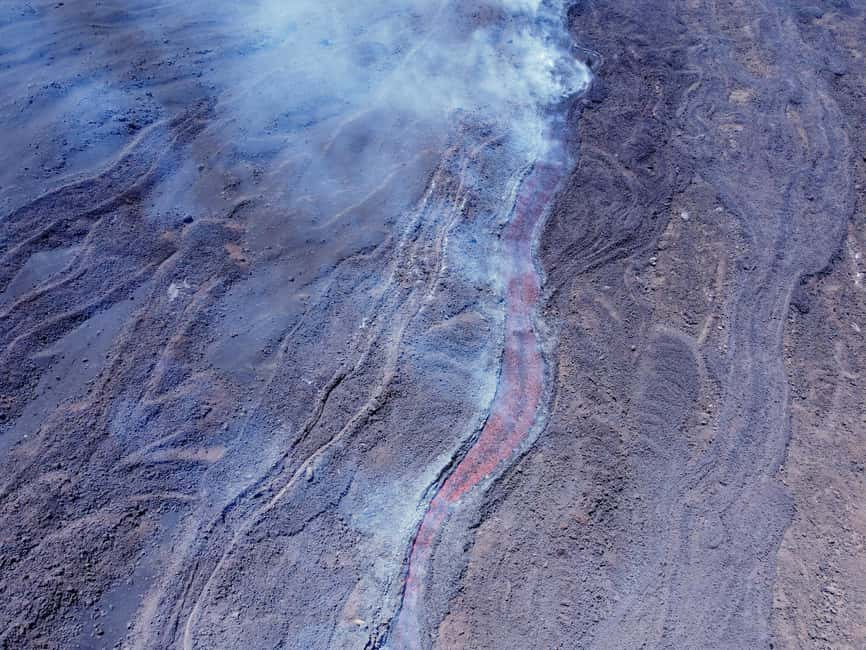
The tour begins at Monte Gebel, near the souvenir shop in the Rifugio Sapienza square. You can park at the square, then meet the group before heading upward.
At about 1900 meters, the mountain already feels different from the Sicilian coast. The air is cooler, the ground is volcanic, and the upper slopes open into broad, dark fields shaped by eruptions. The mountain is not just a viewpoint here. You are entering an active volcanic zone.
The first lift takes about 15 minutes by cable car to approximately 2500 meters. From there, a 4×4 vehicle carries you higher, reaching around 2850 meters in about 20 minutes. The extra transport costs €82 for adults and €51 for children up to age 10, paid on site. That fee matters when you judge the full cost. The advertised tour price is $77 per person, but the cable car and vehicle are essential parts of this particular route, not optional extras in any practical sense.
The transport is useful because it puts you near the high-altitude hiking route without spending hours on a lower approach. It also means you can focus your energy on the most unusual part of the mountain: the summit zone.
More Volcano Treks in Italy
- Mount Etna: Guided Trek 3,000 Meters to the Summit
★ 4.8 · 1,407 reviews - Etna Sunset Tour: Volcano trek, Cave & tasting from Catania
★ 4.8 · 1,290 reviews - From Catania: trek on Mount Etna, Lava Cave & tasting Tour
★ 4.8 · 563 reviews
The Two-Hour Climb to the Summit Craters
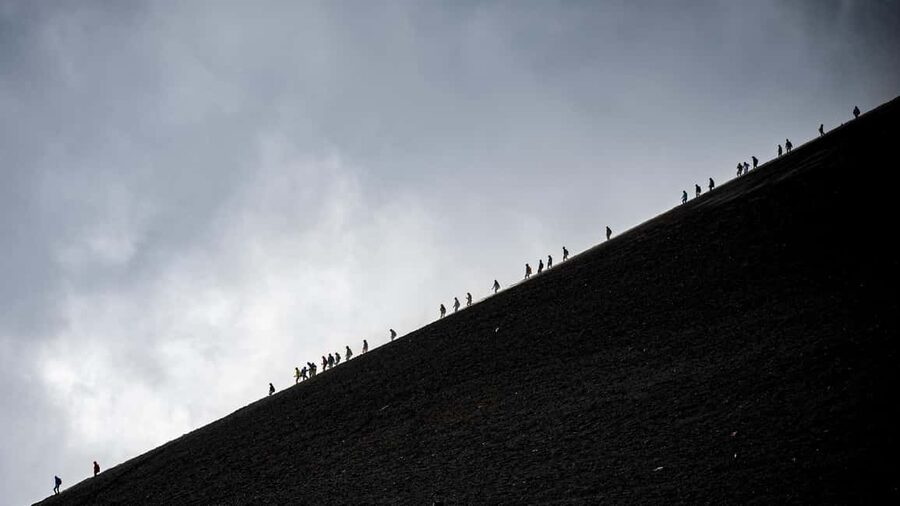
From the 4×4 drop-off point, the serious walking begins. The ascent to the summit craters takes about two hours, and the footing is not a normal mountain trail. You move through recent lava flows, loose sand, and volcanic lapilli, the small fragments of rock scattered by eruptions.
Loose volcanic ground can make a short distance feel much longer. You may take one step forward and slide slightly back, especially on steeper ash-covered sections. Trekking poles are supplied, and you should use them. They help with balance and reduce strain on your knees during both the climb and descent.
The route reaches about 3340 meters, although the exact summit access can depend on current volcanic and weather conditions. One participant reached a lower point because weather prevented access to the top, but the guide adapted the outing rather than simply ending it. That is important on Etna. The volcano is active, and safety conditions can change.
The altitude also affects the effort. You do not need to be an elite mountaineer, but you should be comfortable with a sustained uphill walk on unstable ground. The age minimum is nine, and the experience is not suitable for pregnant women, people with heart problems, high blood pressure, or altitude sickness. It is also not suitable for anyone over 95 years old.
Bring at least 1.5 liters of water per person. I would also pack more food than you think you need, since lunch is not included and the route lasts about six hours.
Standing Above the Central Crater
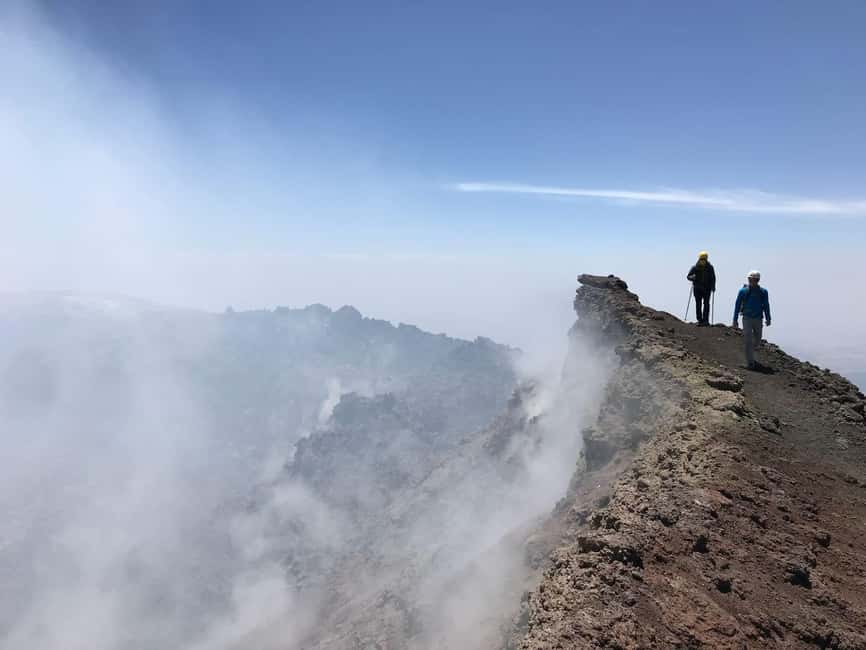
The central crater is the dramatic high point of the outing. After the long climb, you walk along its edge and look toward two main volcanic conduits, known as the chasm and the new mouth.
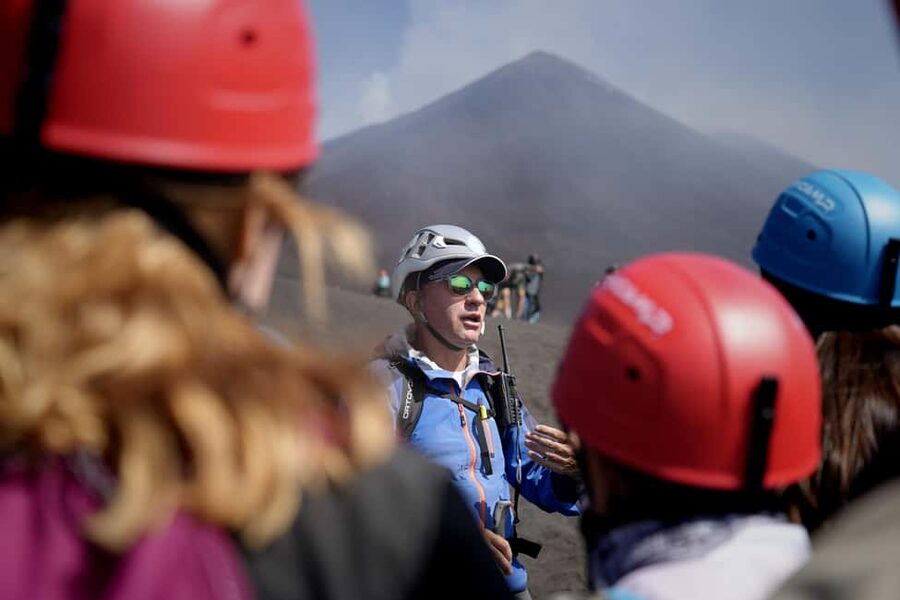
This is where the guide adds real value. A volcanology guide can explain what you are seeing instead of leaving you with a black hole, a pile of ash, and a few photographs. The experience is more satisfying when you understand that Etna’s summit is a changing system of vents and eruption points, not a single tidy cone.
The guide leads the walk in English, French, or Italian. Private and small-group options are available, which may suit you if you want a more flexible pace or more room for questions. Still, the pace may not always feel leisurely. One participant found the hike too fast and wanted longer pauses along the route, even though the summit views were excellent.
That is a useful warning. The published duration is six hours, but the actual pace can vary. One group finished about an hour earlier than expected. If you want long stops for sketching, quiet observation, or repeated photographs, tell your guide early and ask how much time is planned at each stop.
The Southeast Crater and Recent Eruption Zones
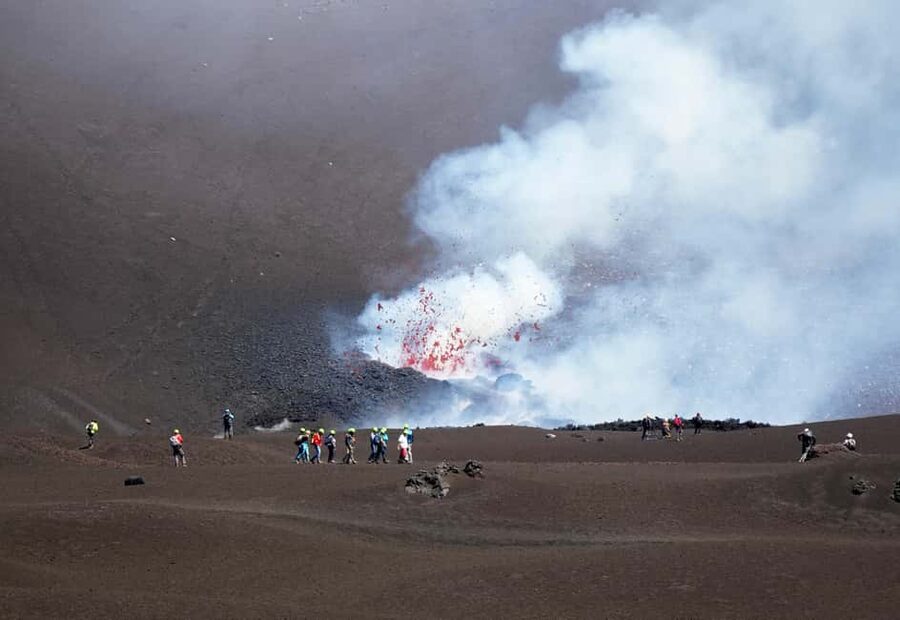
After the central crater, the route continues toward the southeast crater. This area has produced many of Etna’s eruptions in recent decades, giving you a direct sense of how active the mountain remains.
The views from this section are one of the strongest reasons to choose the hike rather than a short cable-car visit. You see the upper volcanic cone, old and recent eruption scars, and broad views across Sicily when conditions are clear. The exact visibility depends on clouds, wind, and volcanic weather, so you should not book this expecting a guaranteed panorama.
The summit area can also be windy and cold, even when conditions at Rifugio Sapienza feel mild. The operator provides a windbreaker, helmet, and trekking poles, but you should wear warm layers beneath the outer shell. Long pants are required, and they are a good idea for protection from abrasive volcanic dust.
The summit is the part of the route that demands the most physical effort, but the descent begins in a more playful way. You drop down a sandy slope toward roughly 3000 meters. The loose surface can make the descent quick, but it can also be hard on knees and ankles. Good footwear and careful footing matter more here than speed.
More Volcano Treks in Catania
- Mount Etna: North Upper Craters Guided Tour by 4×4 with Trek
★ 4.6 · 243 reviews - Catania: Mount Etna Sunset Trekking with Wine Tasting
★ 5.0 · 140 reviews - From Catania: Private mt. Etna trekking and pic-nic
★ 5.0 · 37 reviews - Etna trekking and wine tasting
★ 5.0 · 28 reviews
Lunch at About 3000 Meters
The group stops for a lunch break at around 3000 meters. Lunch is not included, so bring your own food.
This pause gives you a chance to drink, eat, and recover before the second half of the descent. Do not treat it as an afterthought. The climb to the summit and the loose volcanic surface can use more energy than the distance suggests.
The timing also makes this a good point to reassess your comfort. If your knees are already tired, the remaining route still includes uneven ground and more walking. The tour provides equipment, but it does not remove the physical demands of the mountain.
One of the strongest practical tips from the experience is to pack properly: layered clothing, long pants, at least 1.5 liters of water, and enough food for the full outing. The supplied windbreaker helps with exposure, but it is not a substitute for your own warm clothing.
The Barbagallo Craters and Lava Channel
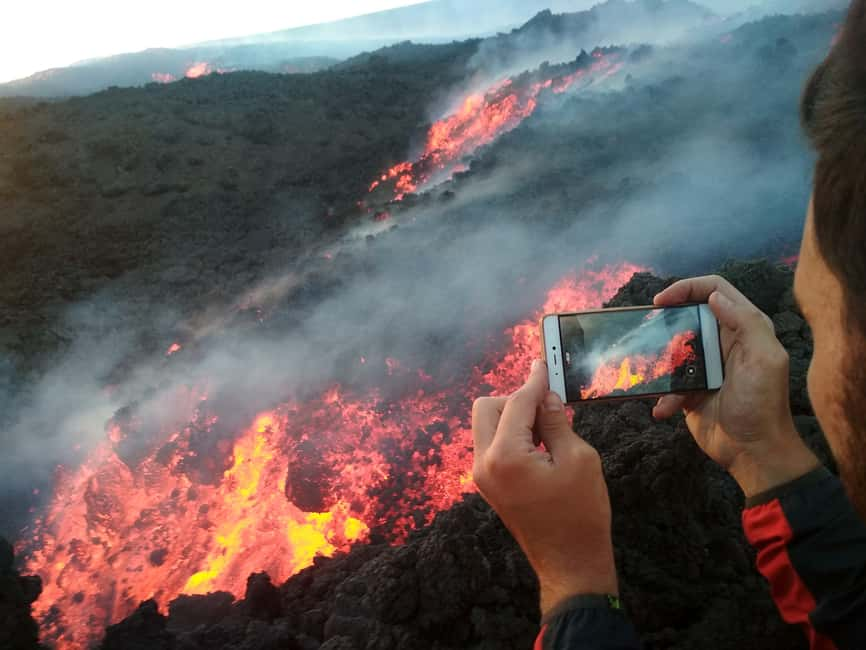
After lunch, you continue toward the Barbagallo craters, created during the 2002 and 2003 lateral eruption. You walk around their perimeter for about an hour, with time for explanation and photographs.
These lower craters offer a useful contrast with the summit. At the top, you are looking into Etna’s main volcanic system. At Barbagallo, you are seeing the evidence of a specific lateral eruption and the way lava can open new vents on the mountain’s flank.
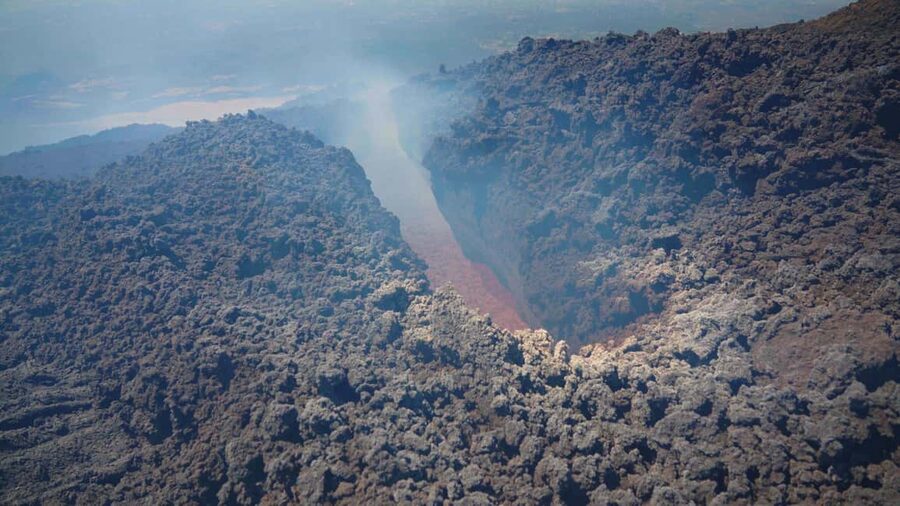
The route then reaches the mouth of a lava-flow channel. This is a canyon-like formation created as lava moved through the area. You enter the channel, adding a more enclosed section to a day that otherwise takes place in wide, open volcanic terrain.
This part is especially good for anyone who wants more than a summit photograph. You are not simply walking up and returning by the same route. The descent passes through several different volcanic forms, each linked to a different stage or style of eruption.
The exact feel of the lava channel will depend on conditions and the guide’s route, so expect a guided walk rather than a technical cave expedition. A helmet is included, which is appropriate for the uneven volcanic setting.
Valle del Bove and the Final Descent
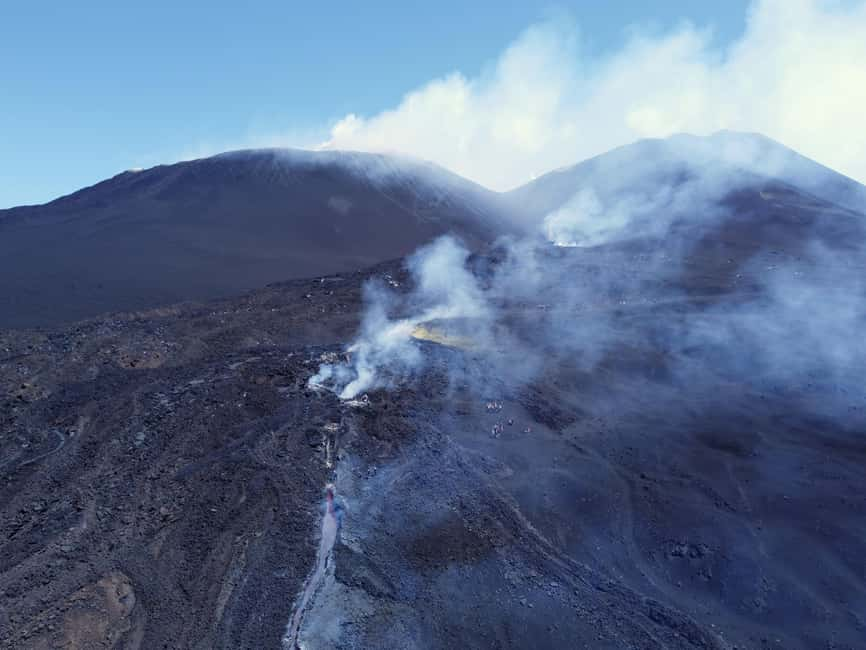
The next major stop is Valle del Bove, an ancient caldera formed about 9000 years ago when older eruptive centers collapsed. The viewpoint comes after roughly 30 minutes of hiking and provides one of the day’s broadest scenes.
From here, you can appreciate the scale of Etna in a way that is harder to grasp near the summit. The valley is a huge volcanic depression, shaped by collapse and later eruptions. The guide can connect what you saw at the summit with the much older structure below.
There is a short stop for photographs and explanation before the route continues toward a lateral crater created during the 2001 eruption. This final volcanic feature reinforces one of the trip’s central ideas: Etna is not one frozen monument. It is a mountain with a long eruptive past and a more recent record of change.
The descent then returns you to the cable car. The ride back to the starting area takes about 15 minutes, bringing you to Monte Gebel and the Rifugio Sapienza area.
What the Price Really Covers
At $77 per person, the guided portion is fairly attractive for a six-hour mountain experience with specialist interpretation and safety equipment. You receive the hike, a volcanology guide, windbreaker, trekking poles, protective helmet, and insurance.
But you need to add the €82 adult cable car and 4×4 charge. That makes the actual outlay much higher than the headline price. You also pay for lunch separately, and you should budget for food and substantial water.
I still see value here if your priority is reaching the high summit zone with a guide instead of arranging each part yourself. The transport gets you to 2850 meters, and the guide organizes a route that links summit craters, recent eruption sites, a lava channel, and Valle del Bove.
The value is weaker if you mainly want a quick scenic ride or a relaxed mountain walk. The high-altitude hike is the reason to book, and it is also the main demand.
How Hard Is the Hike?
The two-hour summit ascent is the hardest section. Loose ash, volcanic lapilli, and uneven lava make the surface tiring. The descent may feel faster, but sandy slopes can be uncomfortable for anyone with weak knees.
I would rate this as a demanding day rather than a casual excursion. You need reasonable fitness, steady balance, and the ability to walk uphill at altitude. The route includes several stops, but it is not designed as a slow stroll with long rests at every viewpoint.
The supplied poles are helpful, and a helmet is provided for the lava-channel section. Wear sturdy walking shoes or hiking boots, although the supplied information does not specify a footwear requirement. Long pants are required, and layered clothing is strongly recommended.
Weather can change the plan. Access to the highest point is not guaranteed, as one outing had to stop short because of weather. The guide can still provide a full volcanic route, but you should accept that Etna sets the terms.
Who Should Book This Etna Trek?
I would choose this for an active adult who wants a close look at Mount Etna’s volcanic features and does not mind paying extra for the cable car and 4×4. It suits you especially well if a summit goal matters, but you also want more than a climb straight up and down.
It is a good fit for visitors who enjoy geology, recent eruptions, unusual terrain, and strong views. The English, French, and Italian guiding options make it practical for international groups, while private and small-group formats may help if you prefer more personal attention.
I would hesitate if you have heart problems, high blood pressure, altitude sickness, are pregnant, or are not comfortable with strenuous walking. Children under nine cannot join, and anyone with knee trouble should think carefully before booking.
The fast pace is another factor. If you like covering ground and reaching the summit efficiently, that may suit you. If you want frequent long pauses, ask about pacing before you commit.
Should You Book It?
Book this tour if you want the full high-Etna experience: cable car, 4×4 access, summit craters, recent lava, Barbagallo, a lava channel, and Valle del Bove in one organized day.
Skip it if you want a cheap excursion, a guaranteed summit visit, or a gentle walk. The real cost includes €82 for the adult transport ticket, and the hike asks for good fitness, water, layers, and patience with changing weather.
For the right person, this is a strong introduction to Etna because it combines serious volcanic scenery with a guide who can explain what you are seeing. Just arrive prepared to work for the views.
FAQ
Where does the Etna hike begin?
The meeting point is at the Monte Gebel souvenir shop in the Rifugio Sapienza square. You can park in the square before meeting the group.
How high does the trek reach?
The hike reaches the summit craters at about 3340 meters. The route description also refers to the summit area as approximately 3300 meters.
How long does the experience last?
The stated duration is six hours. The actual finish time can vary, and the pace may be faster than expected.
Are the cable car and 4×4 included in the price?
No. The round-trip cable car and 4×4 vehicle cost €82 for adults and €51 for children up to age 10, paid on site.
What equipment is provided?
The tour includes a windbreaker, trekking poles, a protective helmet, and insurance. The guided Etna hike is also included.
What should I bring?
Bring long pants, layered clothing, and at least 1.5 liters of water per person. Lunch is not included, so bring food for the break at around 3000 meters.
Which languages are available?
The live guide service is available in English, French, and Italian.
Can children join the hike?
Children under nine years old cannot participate. The experience is also not suitable for pregnant women, people with heart problems, altitude sickness, or high blood pressure.
Latest treks added in Catania
- Trekking in the morning on Mount Etna★ 5.0 · 2 reviews
- Nature Reserve ,Trekking Eco Tour in Iblei National Park★ 5.0 · 27 reviews
- Sunset Trekking on Mount Etna★ 5.0 · 3 reviews
- Mount Etna Advanced Trekking: Private Full-Day Tour from Catania★ 5.0 · 21 reviews
- Etna trekking and wine tasting★ 5.0 · 28 reviews
- One Day Tour in Catania and Trekking on Etna★ 5.0 · 2 reviews
- From Catania: Private mt. Etna trekking and pic-nic★ 5.0 · 37 reviews
- Piano Provenzana: Guided Mt. Etna Snowshoeing Trek★ 5.0 · 3 reviews
Volcano Treks, compared.
Mount Etna: Trek to 3000m with cable car and 4×4
Read our review →
Etna: summit craters trekking with volcano guide 3350mt
Read our review →
Mount Etna Trekking Tour Beyond the Tourist Trails
Read our review →
Mount Etna: Guided Trek 3,000 Meters to the Summit
Read our review →
Etna Sunset Tour: Volcano trek, Cave & tasting from Catania
Read our review →
Browse the lists this tour appears in