
REVIEW · SPAIN
Timanfaya National Park Trekking with a Typical Canarian Snack
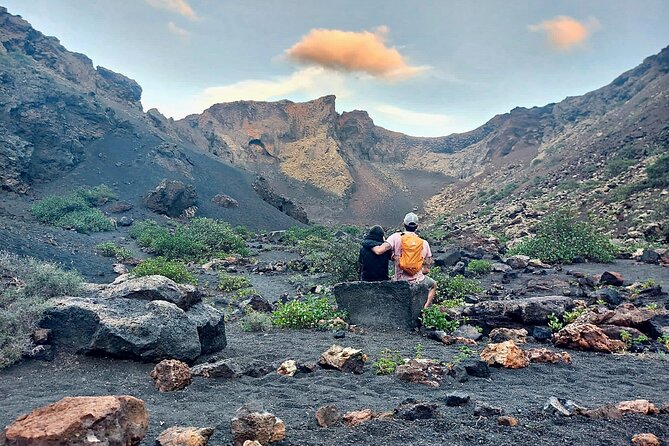
The most memorable part of this 3.5-hour volcanic walk is entering El Cuervo crater itself. You move from a volcanic tunnel near Masdache to Ortiz Volcano, Colorado Volcano, and the Black Volcano, then finish with sunset colors over Pico Partido. It is a lot of Lanzarote geology in one outing.
I like the small group, capped at 10 people, and the pause beside the fallen palm tree for a Canarian snack and local wine. I also like the guides’ personal touch. Sandra is praised for her clear explanations and island tips, while Eric brings plenty of energy to the walk. The main drawback is the 9 km distance, which calls for decent shoes, water, and a reasonable level of fitness.
Key points at a glance
- Enter El Cuervo crater: Walk into the heart of one of Lanzarote’s most striking volcanic sites.
- See several kinds of volcanic terrain: The route includes a volcanic tunnel, red scoria, black lava, and rough malpaís.
- Enjoy a local break: A Canarian aperitif and local wine are served beside the fallen palm tree.
- Keep the group personal: The maximum group size is 10, giving you a better chance to ask questions.
- Finish at sunset: The final views toward Pico Partido add a strong closing scene.
- Plan for a proper walk: The circular route covers about 9 km and weather may change the plan.
Why this Lanzarote walk is more than a crater visit
Lanzarote can look stark at first glance. Black lava, rust-red cones, and dry hills fill the view. On this route, those bare surfaces become a readable story. Your guide explains how eruptions shaped the ground, how volcanic material was thrown from the cones, and how people have adapted to land that appears difficult to use.
That is the real value here. You are not simply stopping at a viewpoint, taking a photo, and moving on. You walk through several volcanic settings at a human pace. The changes in color and texture become easier to notice: red material around Colorado Volcano, dark lava around Volcán Negro, and the rough fields known as malpaís.
The route is also a good fit if you want nature and culture together. The snack stop gives the outing a local flavor, while the information about life around the lava helps connect geology with daily life. I find that balance more rewarding than a visit focused only on dramatic scenery.
The experience is offered in English, and the group limit of 10 matters. A guide can point out small details without trying to speak over a large crowd. The published rating is 4.7 from 13 ratings, and 92 percent of people who rated it recommend it. That is a strong signal, though the sample remains fairly small.
More National Park Treks in Spain
- Chiang Mai: Doi Inthanon National Park and Pha Dok Siew Trek
★ 4.5 · 527 reviews - From Kuala Lumpur: Taman Negara National Park Trek Day Tour
★ 4.4 · 395 reviews - Doi inthanon National Park + 2Hour Fantastic Trekking with Lunch
★ 4.5 · 233 reviews
Starting near Masdache and the Ortiz Volcano
The meeting point is the Ermita de Santa María Magdalena, at Carr. El Centro, 28, in Tías. The tour returns to this same meeting point, so you do not need to arrange a separate end location.
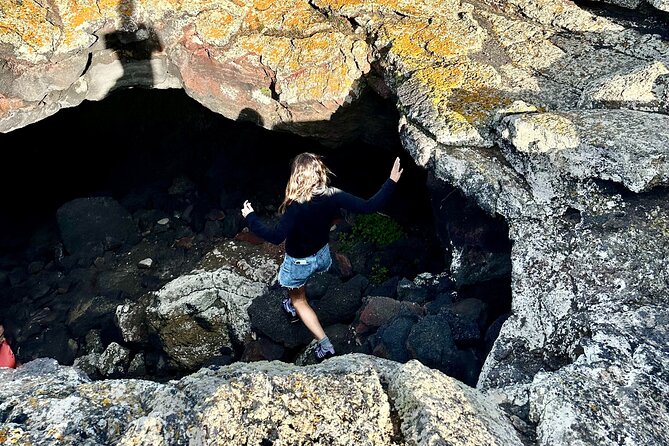
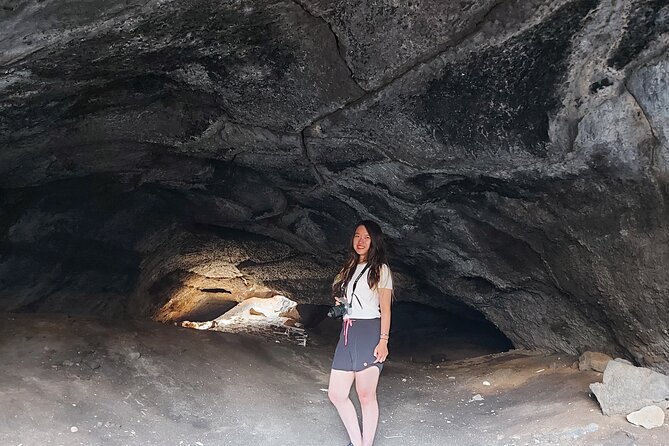
Before the main walk gets going, you stop in Masdache to see a volcanic tunnel. This is a useful opening because it shows what volcanic activity can create below the surface, not only what it leaves in open fields. The tunnel also sets up the rest of the outing: you are about to spend several hours reading the effects of eruptions from different angles.
The walk begins near Ortiz Volcano. Here, you can observe layers of material thrown out during an eruption. Those layers are not just colored bands for photographs. They help you picture the force of the eruption and the sequence in which ash, lapilli, and larger fragments may have settled. Your guide’s explanation is important at this point, since the ground can otherwise look like one broad mass of dark stone.
I would pay attention to the color changes and the slopes around the cone. They are among the details most easily missed when you are trying to keep up with a group or focusing only on the biggest view. The walk gives you time to notice them.
Colorado Volcano and the red volcanic cone
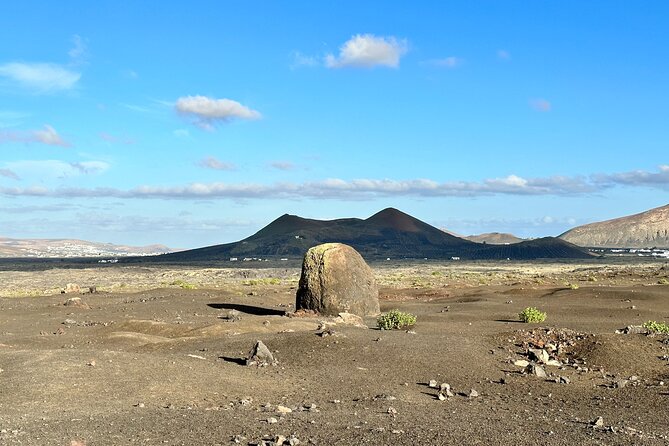
The next major feature is Colorado Volcano, a strombolian cone with strong red tones. The red material gives this section a different character from the darker lava fields later in the route.
A strombolian eruption is associated with bursts that throw volcanic material from a vent. You do not need a geology lesson to enjoy the cone, but knowing the type of eruption helps explain its shape and the scattered material around it. This is one of those places where the guide’s local knowledge adds real value. Several comments about Sandra point to clear explanations, good humor, and interesting information about the park and the island.
The setting should suit photographers, but you do not need to be a serious photographer to enjoy it. The red cone creates a clear contrast with Lanzarote’s black ground and open sky. If the light is good, the color becomes especially noticeable.
Keep in mind that this is a walking experience, not a series of roadside stops. You will cover ground between the main features. Comfortable walking shoes are specifically recommended, along with a hat, sunscreen, and water. The terrain is volcanic, so practical footwear matters more than fashionable footwear.
Black Volcano and the malpaís
The route continues to the Black Volcano, or Volcán Negro, surrounded by malpaís. The word refers to rough lava terrain, and it captures the feeling of this part of the walk. The ground appears harsh and broken, with little obvious sign of life.
This is where the cultural side of the excursion becomes especially useful. Your guide explains how local people have adapted to and used land that seems barren. That turns the malpaís from a dramatic backdrop into part of Lanzarote’s human story.
I like this section because it asks you to slow down and reconsider what you see. Volcanic ground is not simply empty ground. It affects movement, farming, settlement, and the way people use natural resources. The guide’s explanations help you see those connections without turning the walk into a formal classroom.
The surface can also make the 9 km route feel more demanding than the distance suggests. The tour information says most people can participate, but it still makes sense to judge the outing by the full walking distance and uneven volcanic terrain. If you prefer very short walks or have trouble on rough ground, this may not be your best Lanzarote activity.
More Trekking Tours in Spain
- La Palma: Tajogaite Volcano Guided Trek
★ 4.8 · 1,810 reviews - Lanzarote: Timanfaya Natural Park Trekking Tour
★ 4.8 · 766 reviews - Volcano Trekking Tour (Timanfaya eruptions)
★ 5.0 · 339 reviews - Caminito del Rey: Trekking Tour with Hiking Guide
★ 4.1 · 295 reviews
The fallen palm tree, snack, and local wine
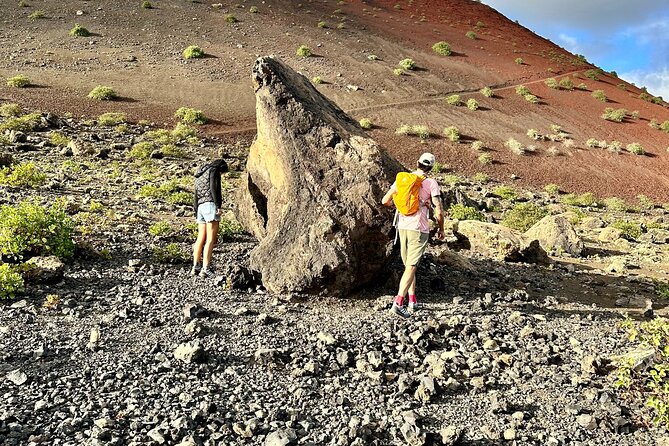
A short break comes near a fallen palm tree, described as a symbol of resilience in this severe setting. It is an unusual detail, and it gives the stop a focal point beyond simply sitting down for a rest.
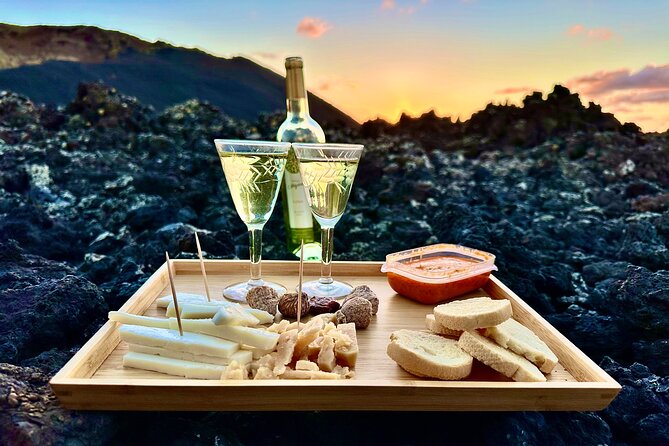
You receive a typical Canarian aperitif paired with local wine. The snack is included as part of the experience, and it improves the rhythm of the outing. After walking through dark lava and red volcanic material, a pause with local food makes the day feel connected to the island rather than like a geology lecture with scenery attached.
Do not expect this to replace a full meal. The information describes it as an aperitif or snack, so you should eat normally before the activity if you need substantial food. Water is still essential, especially under Lanzarote’s strong sun.
This is also a good moment to ask questions. The small group size should make conversation easier, and Sandra is praised for offering recommendations about the rest of the island as well as explaining the route. That sort of informal advice can be handy if this is one of your first days in Lanzarote.
Walking inside El Cuervo crater
The high point of the route is El Cuervo Volcano. Instead of viewing the crater only from outside, you enter it and walk inside the volcano’s bowl. That change in scale is what gives the stop its impact. A cone seen from a distance becomes a space you can walk through.
The crater is also the reason this outing feels different from a standard scenic drive. You are physically surrounded by volcanic walls and surfaces rather than simply looking at them through a coach window. The guide can help explain what you are seeing and point out details that may not be obvious at first glance.
Allow yourself time to look around rather than rushing to the next photo. The crater is the kind of place where the shape of the walls, the color of the rock, and the open view above you all work together. A guide-led visit is particularly helpful here because the geological story gives the setting more meaning.
The route may be adjusted if weather conditions affect safety. That is sensible on exposed volcanic terrain. It also means the exact sequence or length could change, so you should arrive ready for a guided outdoor activity rather than a fixed indoor-style program.
Sunset over Pico Partido
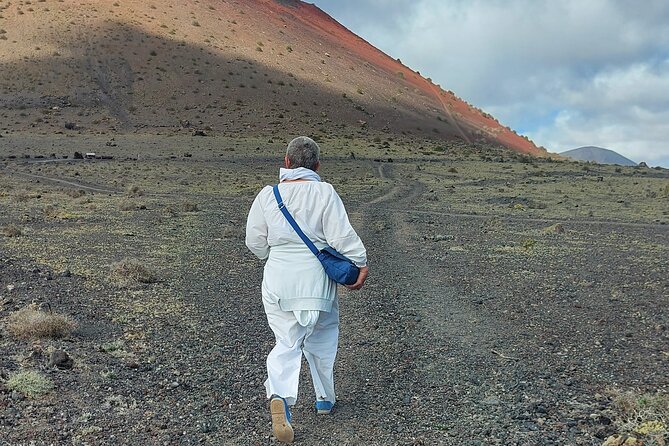
The final scene is sunset over Pico Partido. As the light drops, the volcanic ground takes on warmer gold and red tones. This gives the end of the walk a different mood from the earlier sections, which rely more on the strong daytime contrast between black lava and red cones.
Sunset timing can be one of the most attractive features of this experience, but it also requires realistic expectations. Light depends on the day’s weather, cloud, and the exact timing of the route. The description promises the chance to see the sunset, not a guaranteed perfect sky.
Still, the placement of the final views makes sense. You finish after seeing the main volcanic features, so the changing light becomes a final way to read the terrain. Pico Partido is not just a backdrop. It helps close the story of the route with the same volcanic forms you have been studying for hours.
Bring your phone or camera if you want photographs, but keep one eye on the walk. Volcanic terrain and fading light are not the time to wander away from the guide or hurry over rough ground for a better angle.
Guide style and group size
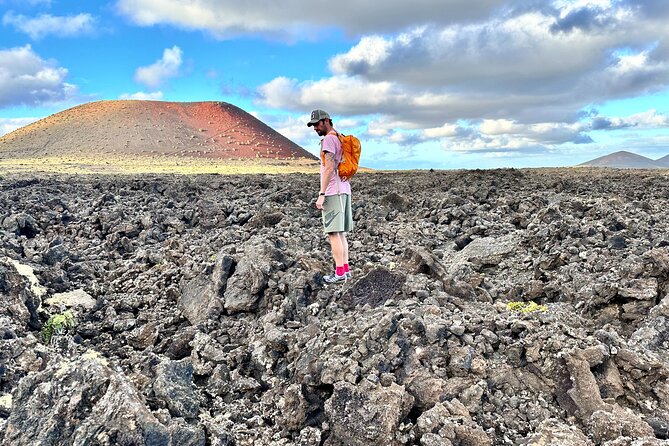
The strongest personal praise is aimed at the guides. Sandra is described as friendly, entertaining, and informative, with particularly useful explanations about the park and recommendations for other parts of Lanzarote. Eric is also singled out for making the three-hour experience fun and full of information.
You should not assume which guide you will receive, but the named examples give you a sense of the intended style. This is not presented as a silent hike where you simply follow a marked path. The guide is central to understanding the volcanic features and the local context.
The maximum group size is 10. That is small enough to keep the outing more personal and large enough to maintain a social feel if you are traveling alone or as a couple. A small group can also make it easier to hear explanations and ask for clarification.
The activity is offered in English. Confirmation is provided when you book, and most people can participate. The safest approach is to treat the health requirement as moderate rather than minimal, because you will walk about 9 km on volcanic ground over roughly three and a half hours.
Is $75.86 good value?
At $75.86 per person, this is not the cheapest way to see volcanic terrain in Lanzarote. Its value comes from what is bundled into the outing: a local guide, a small group, a 9 km guided route, several volcanic sites, the crater walk, a Canarian snack, local wine, and a sunset finish.
I think the price makes the most sense if you want interpretation rather than transport alone. A self-guided visit can show you the cones and lava, but it may not explain the layers around Ortiz, the volcanic activity associated with Colorado, or the ways people adapted to the malpaís.
The value is weaker if you only want a quick viewpoint or if you are not comfortable walking for several hours. You are paying for time on your feet, not simply access to a monument. The snack is a pleasant addition, but the geology and guide are the main reasons to book.
The experience is often reserved about 11 days ahead on average. That is useful planning information if your dates are fixed, especially since the group is limited to 10 people. Free cancellation is available if you cancel at least 24 hours before the start time. Changes or cancellations made inside that period are not accepted for a refund.
Who should book this experience?
I would choose this for you if you want a close look at Lanzarote’s volcanic terrain and prefer a guide who can explain what you are seeing. It is a strong match for walkers, amateur geology fans, photographers, and anyone who likes adding local food to an outdoor activity.
It also suits couples and small groups who want something more focused than a large coach tour. Sandra’s reported island recommendations may be useful if you want to combine this outing with other parts of Lanzarote during your stay.
I would think twice if you dislike uneven ground, want a relaxed one-hour stroll, or need a fully predictable schedule. Weather can change the plan, and the 9 km distance is a real commitment. Pack water, sunscreen, a hat, and comfortable shoes, and do not treat the snack as lunch.
Should you book the El Cuervo route?
Book it if you want to walk through Lanzarote’s volcanic story rather than only look at it from a road. The combination of the Masdache tunnel, Ortiz and Colorado volcanoes, Black Volcano, malpaís, the fallen palm tree, El Cuervo crater, local wine, and sunset over Pico Partido gives you a varied half-day.
The strongest reasons to go are the small group, the personal guiding style associated with Sandra and Eric, and the chance to enter the crater. The main question is simple: are you ready for a 9 km walk on volcanic terrain? If yes, the $75.86 price is reasonable for an outing that joins geology, local life, food, and scenery in one well-shaped route.
FAQ
Where does the Timanfaya National Park trekking experience start?
It starts at Ermita de Santa María Magdalena, Carr. El Centro, 28, 35572 Tías, Las Palmas, Spain.
Where does the activity finish?
The experience ends back at the same meeting point.
How long does the tour last?
The activity lasts approximately 3 hours and 30 minutes.
How far is the walking route?
The Route of El Cuervo is described as a 9 km circular trail.
What language is the experience offered in?
The experience is offered in English.
How many people can join the group?
The activity has a maximum of 10 participants.
What should I bring?
You should bring comfortable walking shoes, a hat, sunscreen, and water.
Can the route change because of the weather?
Yes. The experience may be adapted depending on weather conditions for safety.
Latest treks added in Spain
- Rent a Trekking bike: Full Day 24 hours★ 5.0 · 34 reviews
- Trekking Torrent de Pareis★ 5.0 · 15 reviews
- North Volcano Trekking Tour★ 5.0 · 15 reviews
- Hiking and Trekking Barcelona★ 5.0 · 5 reviews
- Mallorca: Torrent de Pareis trekking Adventure★ 5.0 · 3 reviews
- La Palma: Guided e-bike tour (trekking)★ 5.0 · 6 reviews
- Alicante: Via Ferrata del Ponoig Guided Trek and Climb★ 4.9 · 8 reviews
- Fuerteventura: Trekking Tour Through the North of the Island★ 4.8 · 43 reviews
National Park Treks, compared.
Doi Inthanon National Park and Pha Dok Siew Trek
Read our review →
From Kuala Lumpur: Taman Negara National Park Trek Day Tour
Read our review →
Doi inthanon National Park + 2Hour Fantastic Trekking with Lunch
Read our review →
Doi Inthanon National Park with Nature Trail Trekking 1-Day Tour
Read our review →
Cat Ba National Park Full Day Trekking Tour to Viet Hai Village
Read our review →
From Da Nang or Hoi An: Bach Ma National Park Trek & Lunch
Read our review →
Bach Ma National Park trekking deluxe daily tour from Hue
Read our review →
Browse the lists this tour appears in