
REVIEW · ITALY
Catania: Mount Etna Trekking Tour Beyond the Tourist Trails
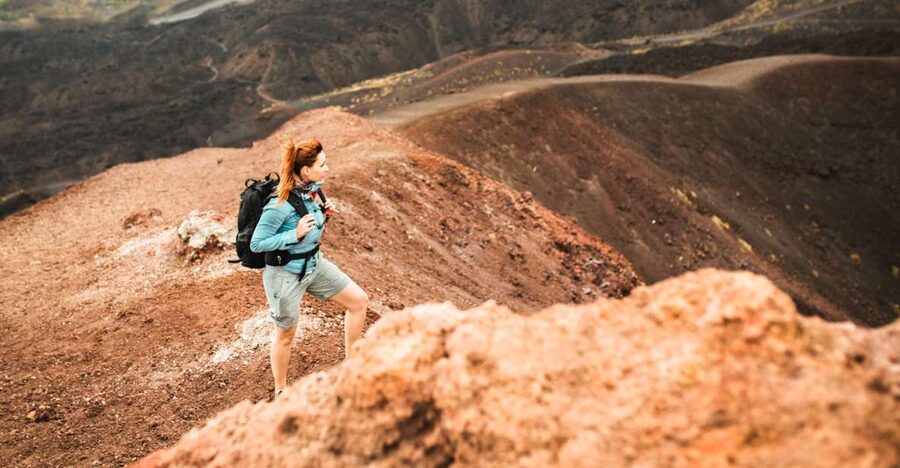
Mount Etna is at its best away from the cable cars and souvenir stalls. This small-group hike follows rough volcanic paths from Silvestri Craters toward the Valle del Bove, with black lava, broad Ionian Sea views, and a playful descent through soft ash.
I like the thoughtful stop in Trecastagni for coffee, water, and a locally made sandwich. I also like the guides, especially Antonio and Renato, who explain Etna’s geology, local customs, and changing conditions in clear, lively English. The main catch is the physical effort: a 550-meter altitude gain, cold wind, loose ash, and weather that can change the route.
At a glance
- A real mountain outing: Climb from about 1,850 to 2,400 meters instead of staying around the easy-access tourist area.
- Guides who add substance: Antonio, Renato, Maria, and the wider team explain lava, eruptions, Sicily, and the volcano’s history.
- Useful equipment included: Borrow hiking shoes, poles, warm layers, gloves, and rain gear if conditions call for them.
- A memorable way down: The soft volcanic sand lets you make a controlled, entertaining slide downhill.
- Small group atmosphere: The usual limit is eight people, though two guides may lead a somewhat larger group.
- Weather matters: Winter can bring snow, wind, rain, or poor visibility, and the route may change for safety.
Why this Etna hike feels different
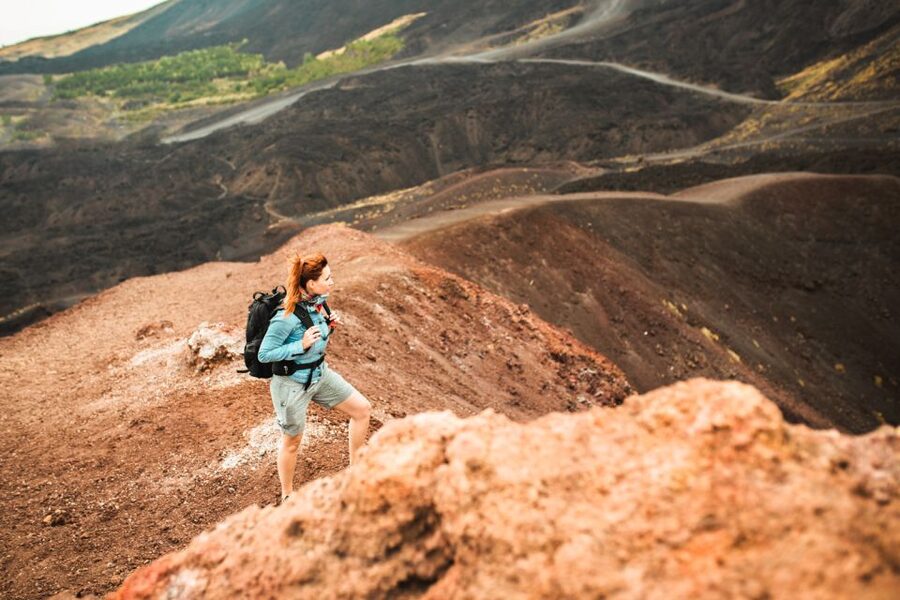
Many Mount Etna outings keep you close to the road, the cable-car station, or the well-worn paths around Rifugio Sapienza. This tour uses those areas as reference points, but its main purpose is to get you walking through quieter volcanic terrain.
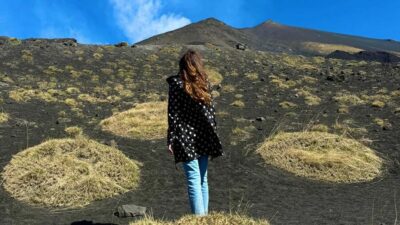
You begin near 1,850 meters and gradually work upward. That difference matters. Instead of simply looking at craters from a viewpoint, you feel the loose ground shift under your shoes, notice the color changes in the lava, and see how quickly the busy tourist area fades behind you.
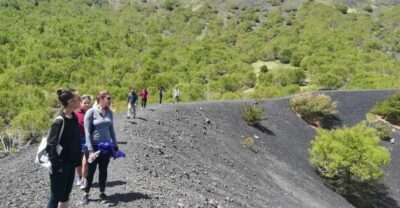
The group size helps. With up to eight participants, the guide can stop to answer questions, adjust the pace, and help with equipment. The guides also appear comfortable with mixed abilities. Antonio is often praised for checking on slower walkers without making them feel singled out, while Renato is known for combining volcano facts with useful advice about Catania and other parts of Sicily.
This is not a summit climb. You do not walk to Etna’s main summit, and you should not expect to approach active lava. The route reaches about 2,400 meters and can change because of eruptions, tremors, snow, rain, or wind. If your goal is a serious ascent, you need a different sort of outing. If you want a well-supported walk through Etna’s upper volcanic world, this is a strong fit.
More Volcano Treks in Italy
- Mount Etna: Trek to 3000m with cable car and 4×4
★ 4.6 · 3,823 reviews - Mount Etna: Summit Crater Trek with Cable Car
★ 4.8 · 1,875 reviews - Etna: summit craters trekking with volcano guide 3350mt
★ 4.7 · 1,712 reviews
From Catania to Trecastagni
The day begins at the McDonald’s meeting point in central Catania. Pickup and return are included in the city center, but hotel pickup is not, so allow time to reach the starting point.
The first van ride takes about 30 minutes. You then stop in Trecastagni for roughly 20 minutes. This is more useful than a routine roadside break. You can buy water, coffee, and a sandwich for lunch, and the team gives a safety briefing before the hike begins.
The food is not included in the $81 price, so bring cash or another way to pay for your own meal and drinks. The local sandwich stop is a nice touch because it avoids the usual packaged excursion lunch and gives you a quick look at a Sicilian town before the high mountain portion of the day.
After Trecastagni, another van ride of about 30 minutes takes you higher. The transport is a practical part of the experience, especially if you are staying in Catania without a car. You can also arrive with your own car and join only the hiking portion, but the listed pickup and drop-off service is limited to Catania city center and Trecastagni.
Silvestri Craters and the first lava fields
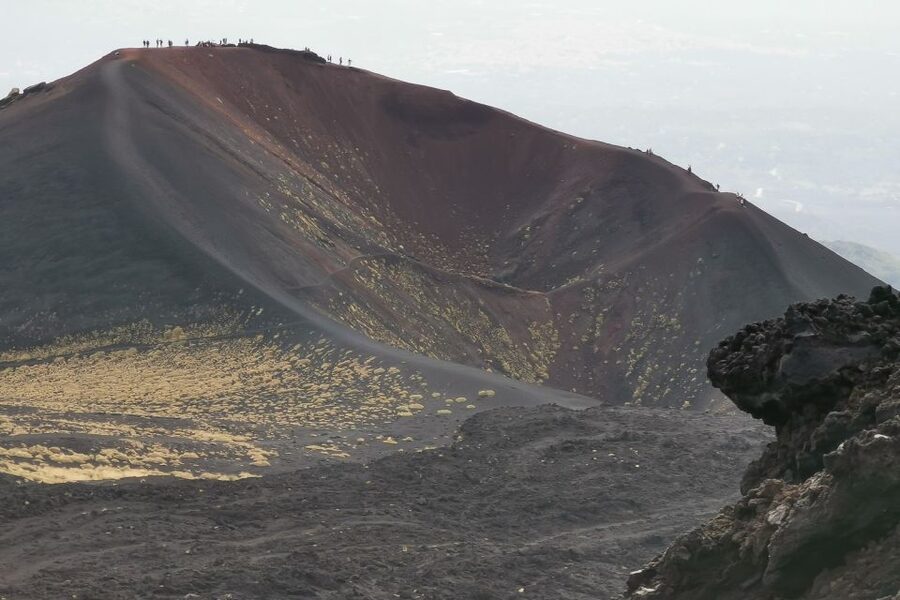
The hike starts around the Silvestri Craters, volcanic cones formed by earlier eruptions. They are among the easiest Etna features to reach, but this outing does not stop with a quick photo and a return to the van.
The guide uses the craters to explain how eruptions build new ground. From there, you move toward the 2001 lava flow and begin the longer climb. Recent lava is not polished or smooth. It can look jagged, dusty, and surprisingly varied, with dark surfaces broken by red-brown tones and small changes in texture.
The first section gives you time to settle into the pace. Even so, the altitude can make the effort feel greater than the same climb at sea level. Take small steps, drink regularly, and do not race the group. The guides make frequent stops for explanations, photographs, and rest.
The route is described as being beyond the usual tourist trails, but do not read that as untouched wilderness. Etna is a popular national park and other walkers may appear. The difference is that you spend much more time on rougher, quieter paths than on the busiest access areas.
The climb to 2,400 meters
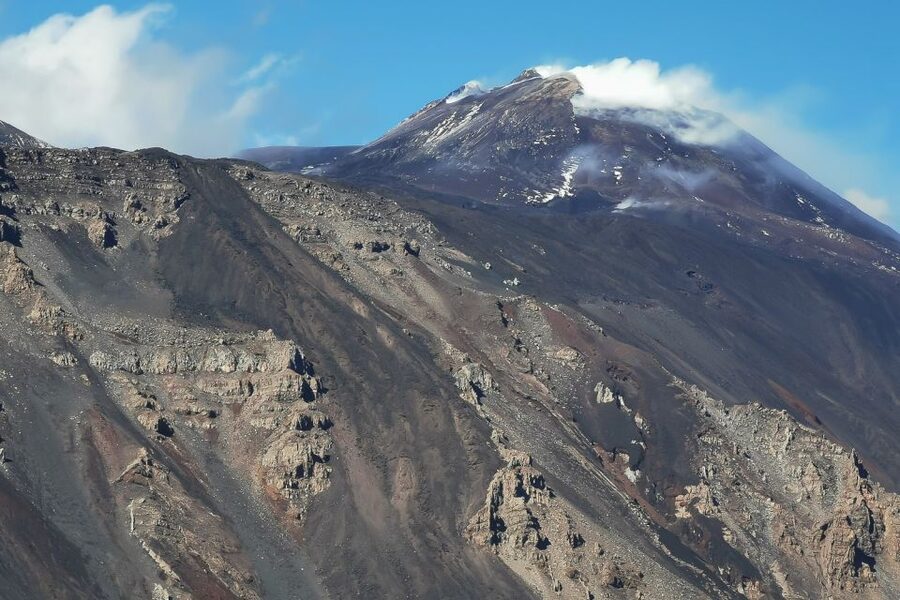
The main walking section lasts about three hours, followed by a lunch and photo break. You climb toward approximately 2,400 meters, with an active altitude difference of about 550 meters.
That is a proper uphill hike. One September participant described it as hard but achievable, especially for someone who exercises but is not used to steep volcanic ground. Other accounts call it manageable, yet the conditions make a big difference. Dry ash can slide underfoot, wind can sap your energy, and cold weather adds another layer of strain.
The guides are prepared for this. Trekking poles and shoes are included, along with warm jackets and rain jackets. Depending on conditions, you may also be able to borrow gloves, extra layers, or a small backpack. You should still bring comfortable clothing, a hat, sunscreen, a jacket, and spare socks.
Do not count on the provided equipment as a reason to wear unsuitable clothes. The gear is helpful, especially if you arrived in Sicily dressed for Catania’s warmth, but a hat, warm base layer, and dry socks remain wise choices. One useful winter tip is to pack an extra pair of socks for after snow or wet weather.
Another trail to compare in Italy:
- Mount Etna: Guided Trek 3,000 Meters to the Summit
★ 4.8 · 1,407 reviews - Stromboli: Sunset Trekking at Sciara del Fuoco
★ 4.6 · 1,372 reviews - Etna Sunset Tour: Volcano trek, Cave & tasting from Catania
★ 4.8 · 1,290 reviews - From Catania: trek on Mount Etna, Lava Cave & tasting Tour
★ 4.8 · 563 reviews
Valle del Bove: Etna’s big natural amphitheater
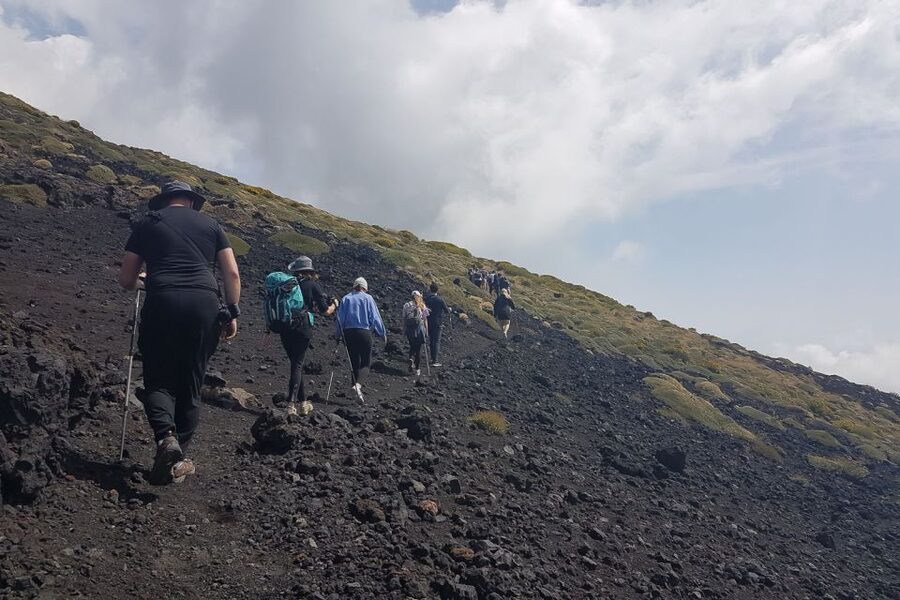
The reward for the climb is the Valle del Bove, a huge volcanic amphitheater on Etna’s eastern side. Its broad basin, dark lava surfaces, and steep edges show the scale of the volcano far better than a small crater can.
From the rim and nearby paths, you can look across black volcanic terrain toward the active southeastern crater and out to the Ionian coastline. On a clear day, the sea gives the view a sharp contrast. On a cloudy or windy day, the experience becomes more atmospheric and raw, but visibility may be limited.
The route allows time to stop and look rather than rush from one landmark to another. Guides such as Renato and Antonio use these pauses to explain lava flows, Etna’s eruptions, and the way the mountain changes over time. Their explanations are a major part of the value. Without them, a field of black rock can be impressive but hard to interpret.
Weather is the wild card. Several outings have continued in rain, cloud, or strong wind with a changed route and good guide judgment. That flexibility is useful, but it also means you should not book this expecting guaranteed sea views. Etna makes its own schedule.
Lunch above the clouds
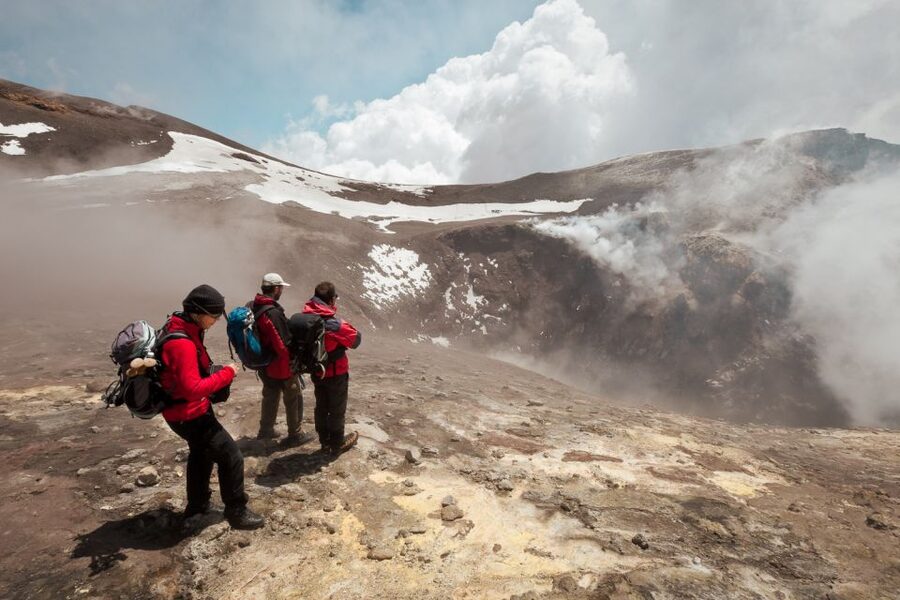
The lunch stop lasts about 20 minutes at roughly 2,400 meters. You eat the sandwich bought in Trecastagni while looking toward the Valle del Bove, the southeastern crater, and the Ionian coast.
This is a simple picnic, not a restaurant meal. That keeps the day moving and lets you eat in a memorable setting. The short break also means you should buy food before the hike begins, since food and drinks are not included.
Twenty minutes is enough for a sandwich, photos, and water, but not a long leisurely meal. If you need more time to eat slowly, tell the guide early. The pace is designed to balance walking, explanations, and transport within seven hours.
The volcanic sand descent
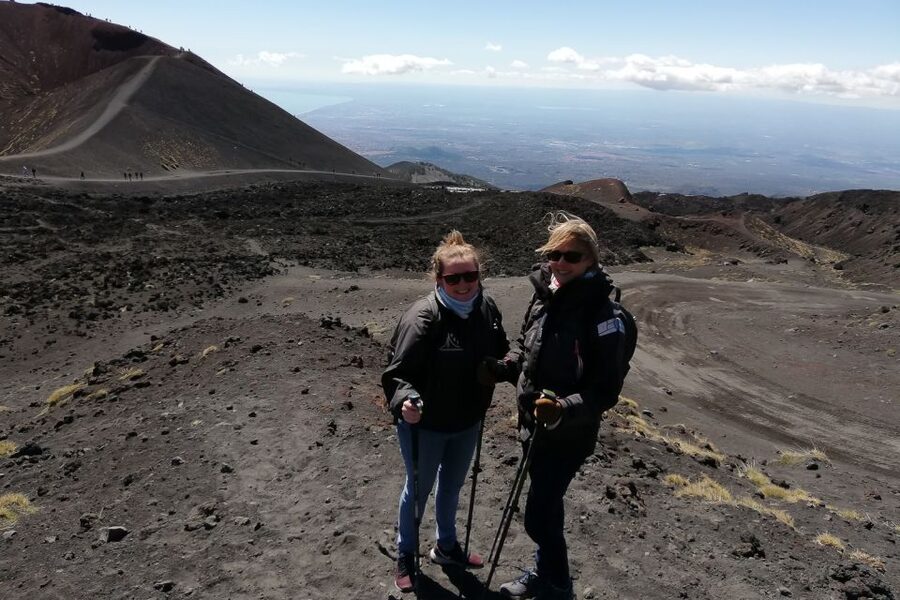
The descent is one of the tour’s most distinctive features. Instead of walking down hard-packed pavement, you move through steep sections of soft volcanic ash, sometimes described as lava-sand beaches.
Your feet sink into the material, and the slope lets you make a controlled slide. It is fun, but it is not effortless. Ash can enter shoes, stain clothing, and make balance tricky. Trekking poles help, and the supplied shoes can save your own footwear from a coating of black dust.
This section may be the highlight for you if you enjoy playful outdoor activity. If you dislike loose ground or have knee, ankle, or balance problems, it may feel less amusing. The descent is also one reason the tour is not suitable for people with mobility impairments or a low level of fitness.
A lava cave and changing volcanic conditions
The tour also includes a lava flow cave, where molten rock once moved underground and later left a hollow passage as the outer surface cooled. This is a very different Etna experience from walking across an open crater.
The cave visit depends on volcanic conditions. If there have been high tremors or eruptions, the cave may be closed even after an eruption has ended. In that case, the route changes for safety. You should treat the cave as an important possibility, not a guarantee.
The equipment supplied by the company helps, but you still need to follow the guide’s instructions closely. This is an active volcanic area, not a staged attraction. The guide’s decision to skip the cave is a safety feature, not a disappointment to argue over.
Rifugio Sapienza and the ride back
After the main hike, the group returns toward Rifugio Sapienza for about 30 minutes. This is a practical recovery stop where you can buy a coffee, local snack, or souvenir and warm up before the drive to Catania.
The final van ride takes about an hour. That makes the total day close to seven hours, including transport, food stops, breaks, and walking. The long return is worth remembering if you have evening plans, a train, or a dinner reservation.
The transport receives strong marks overall, and drivers such as Marco are praised for careful handling on the mountain roads. Still, the day is full. You will likely want a relaxed evening afterward rather than another demanding activity.
What the $81 price really buys
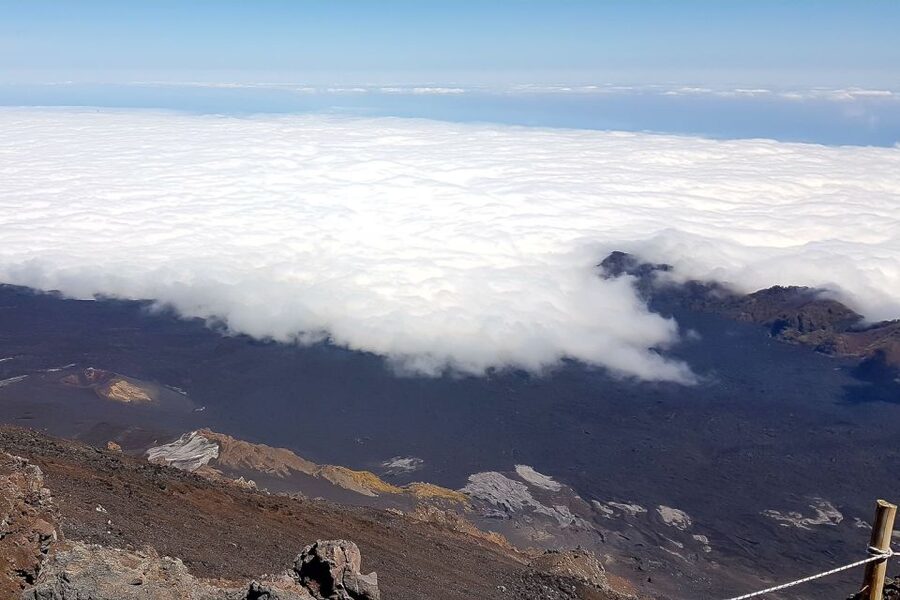
At $81 per person, the tour offers more than a basic ride to Etna. The price includes city-center transport, a naturalist guide, the hike, and a useful collection of borrowed gear. Shoes, poles, warm jackets, and rain jackets can remove the need to pack or rent equipment separately.
The guide is the biggest value. Antonio and Renato are repeatedly singled out for clear explanations, humor, patience, and advice beyond the volcano. They can tell you about Catania restaurants, Sicilian customs, and other places to visit, turning the day into more than a route between viewpoints.
You still pay for lunch, drinks, coffee, and snacks. The price also does not include hotel pickup. Even so, the small group and equipment make the cost fair for visitors who want a genuine hike but do not have mountain gear or a rental car.
The tour has a 4.9 rating from 1,596 reviews, and 86 percent of participants give the transport a perfect score. Those figures suggest reliable organization, but they do not remove the need to judge your own fitness and weather tolerance.
Who should book this hike
This outing suits you if you want:
- A real uphill walk rather than a short crater stop
- A small group with time for questions
- Volcanic geology explained in English or Italian
- A route away from the busiest tourist paths
- Help with shoes, poles, jackets, or rain gear
- A memorable activity from Catania without arranging a car
It is less suitable if you want a gentle sightseeing trip, a guaranteed cave visit, or access to Etna’s summit. Children under 10, pregnant women, and people with heart, respiratory, or altitude-related problems should not take this tour.
You also need to be honest about your fitness. The pace can be adjusted, and the guides are attentive, but you still climb 550 meters on loose volcanic ground. Strong wind, cold, rain, and snow can make the hike harder than expected.
Should you book Mount Etna Trekking Tour Beyond the Tourist Trails?
I would book this if your idea of Etna is walking through fresh volcanic terrain, asking questions, and earning the views with your legs. The combination of Silvestri Craters, the 2001 lava flow, Valle del Bove, a possible lava cave, and the ash-slide descent gives the day plenty of variety.
Choose a warmer season for easier conditions, or choose winter if you like snow and do not mind cold wind and route changes. Bring sunscreen and warm layers in any season. Most important, leave space in your schedule afterward and arrive ready for a proper mountain day.
FAQ
Where does the Mount Etna hike start?
The experience begins at the McDonald’s meeting point in central Catania. Pickup and drop-off are included in Catania city center and Trecastagni, but hotel pickup is not included.
How long is the tour?
The full experience lasts about seven hours. This includes the van rides, Trecastagni stop, hiking, lunch break, Rifugio Sapienza stop, and return to Catania.
What equipment is provided?
The tour provides trekking shoes, trekking sticks, an extra warm jacket, and a rain jacket. Depending on conditions and availability, extra layers, gloves, and a small backpack may also be provided.
Is food included?
No. You can buy water and a locally prepared sandwich in Trecastagni before the hike. Coffee, snacks, and other drinks are also paid for separately.
How high does the hike go?
The hike begins at about 1,850 meters and climbs to approximately 2,400 meters. The active altitude difference is around 550 meters.
Can the lava cave visit be canceled?
Yes. High tremors or eruptions can make the cave unsafe to visit, even after an eruption has finished. In winter, snow or weather may also require the hiking route to change.
Latest treks added in Italy
- Trekking on the roof of Tuscany★ 5.0 · 6 reviews
- Otranto Trekking Adventure: The Path of the Hermit and the Bay of the Turks★ 3.5 · 8 reviews
- Lecce: Hike to Otranto with town visit – Half Day Trekking +Taxi★ 5.0 · 2 reviews
- Wild Walk – Discovering the hidden paths★ 5.0 · 31 reviews
- Wine Hiking Sip & Trek★ 5.0 · 3 reviews
- Dolomites Trekking Experience★ 4.5 · 3 reviews
- Trekking an Island of Palmaria★ 4.5 · 6 reviews
- Trekking in the morning on Mount Etna★ 5.0 · 2 reviews
Volcano Treks, compared.
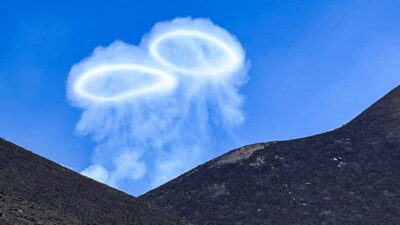
Mount Etna: Trek to 3000m with cable car and 4×4
Read our review →
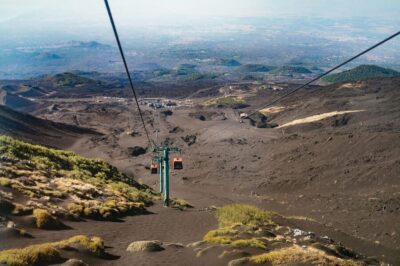
Etna: summit craters trekking with volcano guide 3350mt
Read our review →
Mount Etna: Guided Trek 3,000 Meters to the Summit
Read our review →
Etna Sunset Tour: Volcano trek, Cave & tasting from Catania
Read our review →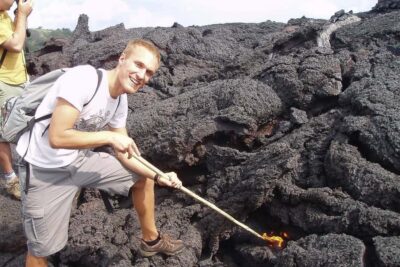
Browse the lists this tour appears in