
REVIEW · CATANIA
Special trekking on the most authentic and wild side of Etna
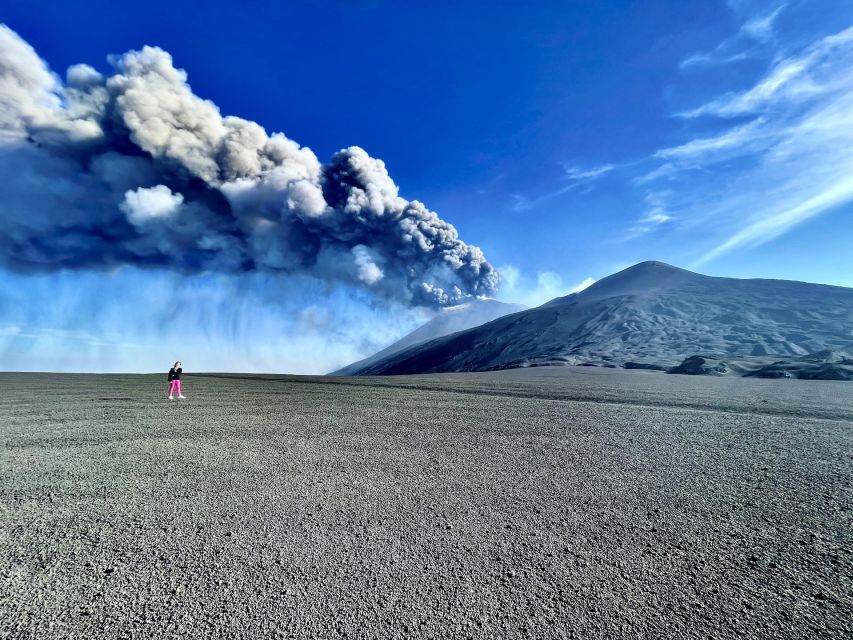
Etna’s north side feels far removed from the cable cars and busy summit routes. This guided trek takes you by 4×4 to 2,800 meters, then sends you on foot past fresh lava flows, old eruption cones, ground fractures, and the dark throat of a volcanic vent. It is the kind of outing that makes Etna feel like a living volcano, not just a mountain with a view.
I like the rarely visited route, which links several eruption sites instead of stopping at one crater. I also like the careful mix of walking and off-road transport, plus the explanations from volcanological guides such as Ciccio, who covers both the science and the eruption history. The catch is the extra 50 euros per person for the 4×4, and this is a high-altitude trek for reasonably fit walkers, not a casual stroll.
Key points to know before you go
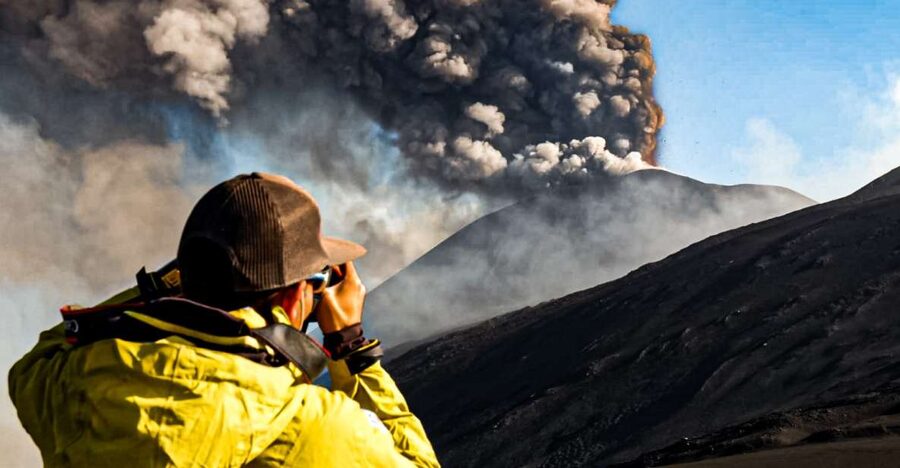
- The north-side route reaches 2,800 to about 2,900 meters, subject to volcanic safety limits and weather.
- A 4×4 ride is required and costs 50 euros extra per person, paid locally.
- The main walk covers about 6 kilometers, mostly downhill or across volcanic ash toward Piano Provenzana.
- You enter a volcanic cone and lava-producing vents, wearing a protective helmet supplied by the guide.
- Views can stretch to Taormina and the Aeolian Islands, though high cloud can erase them.
- The tour requires at least eight participants, and the route is not suitable for people with low fitness, vertigo, heart or respiratory problems, or limited mobility.
Why Etna’s north side is worth your time
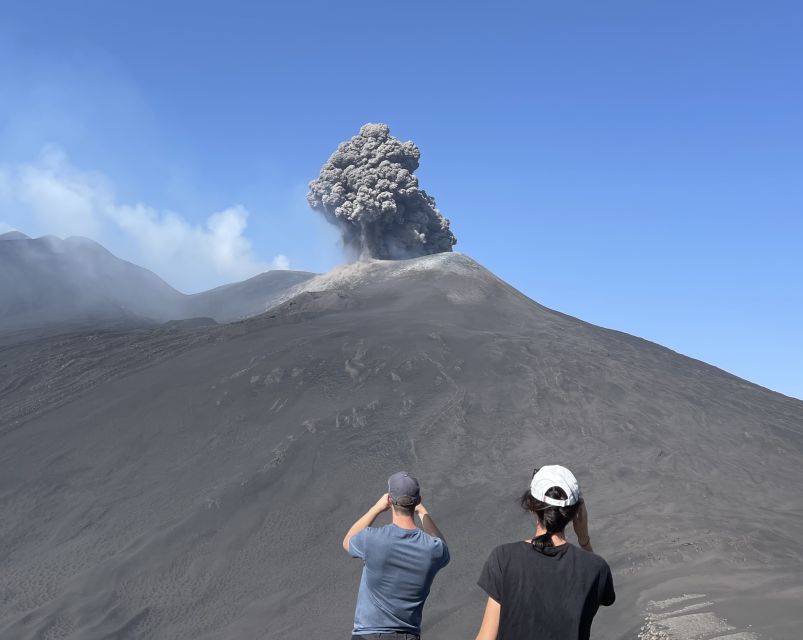
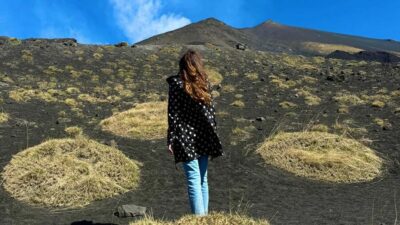
Most first-time Etna excursions focus on the summit area. That makes sense, but the north slope offers a more revealing look at how the volcano works. Here, you walk across a chain of cones and eruption sites created at different times. The ground tells the story in black ash, red-brown cinders, cracked rock, and hardened lava.
The route is especially useful when access to the summit craters is restricted. Volcanic rules can change with little warning, and the authorized guides follow Civil Protection instructions. If the summit area is closed, this is not a consolation prize. You still reach the highest point safely permitted that day and spend hours among major craters and lava vents.
I would choose this outing if I wanted geology explained in the field, rather than simply seeing a crater from a viewing platform. You get time to stop, look closely, and ask questions. The tradeoff is that the route is less polished. Volcanic ash shifts under your feet, the ground can feel rough, and the height adds real physical strain.
More Volcano Treks in Italy
- Mount Etna: Guided Trek 3,000 Meters to the Summit
★ 4.8 · 1,407 reviews - Etna Sunset Tour: Volcano trek, Cave & tasting from Catania
★ 4.8 · 1,290 reviews - From Catania: trek on Mount Etna, Lava Cave & tasting Tour
★ 4.8 · 563 reviews
Meeting at Mareneve and preparing for the mountain
The meeting point is Chiosco Bar Mareneve, beside the chairlift used by skiers in winter. It is the second of four buildings in the parking area. Arrive early enough to find the guide and sort out equipment without rushing.
The guide service includes trekking poles, a helmet, hiking shoes, a warm jacket, extra socks, and a backpack. That is useful if your luggage is light on mountain gear. Still, bring your own windbreaker, long trousers, sunglasses, sunscreen, water, snacks, and a rain jacket or K-way. The supplied clothing does not replace basic personal layers, especially when wind and cloud arrive.
You should wear proper closed hiking shoes. Without suitable footwear, accident insurance does not apply. Sandals, flip-flops, open-toed shoes, and high heels are not allowed, and alcohol cannot be taken in the 4×4.
Parking costs 3 euros for the day and is paid after the excursion. The tour ends back at the same meeting point, even though the long walk itself finishes at Piano Provenzana. That return arrangement matters, since you do not need to arrange a separate ride from the trail’s lower end.
The 4×4 climb from 1,800 to 2,800 meters
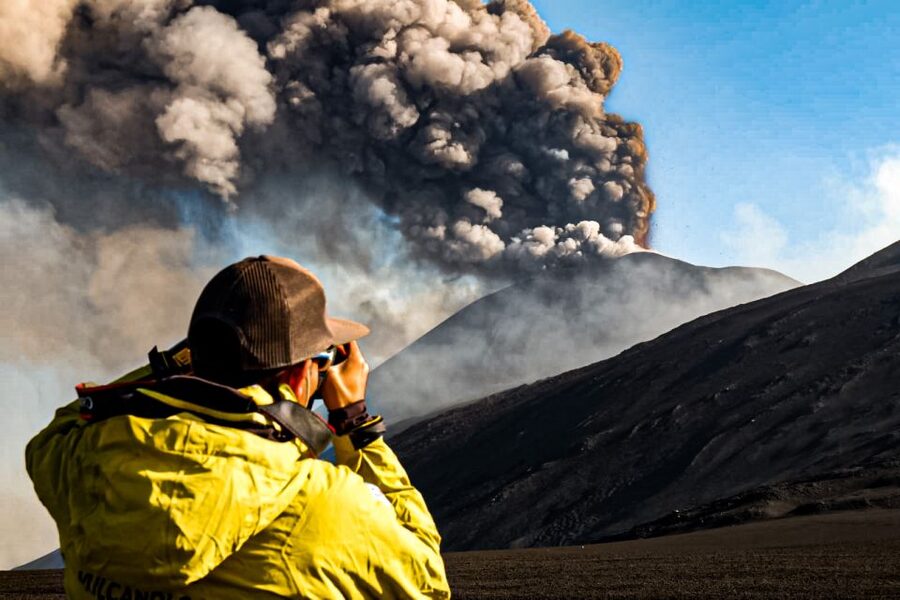
The first major part of the excursion is not on foot. A special 4×4 vehicle carries you from about 1,800 meters to the high volcanological observatory at roughly 2,800 meters. The road covers around 8 kilometers and crosses very rough volcanic ground.
This ride is practical, not luxurious. The surface is uneven, and the vehicle is there because ordinary transport cannot handle the route. The guide begins the explanation on board, giving you useful context before you start walking. That makes the drive part of the experience rather than dead time.
The 50-euro transport charge is the largest extra cost, and you should include it when judging the price. The advertised price is 62.63 euros per person for the guide service, but the realistic basic cost is about 112.63 euros before parking, food, and drinks. That is still reasonable for a four-hour outing with specialist guidance, equipment, insurance, and high-altitude transport, but it is not a 62-euro door-to-door tour.
The exact route and altitude depend on volcanic conditions. Guides are authorized to lead people only within the safety limits in force that day. Do not expect a guaranteed summit visit or a fixed final altitude.
The first walk at 2,800 meters
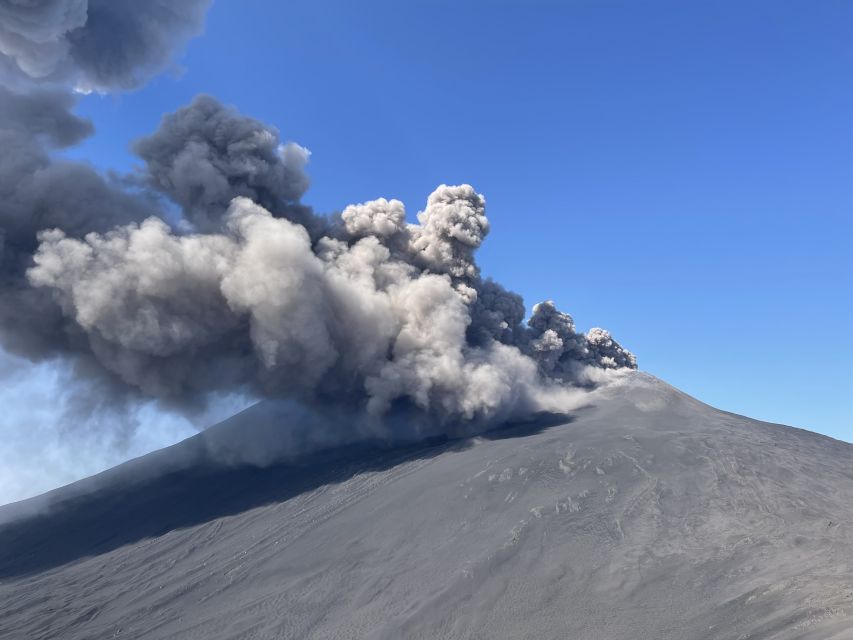
At the high observatory, you begin a shorter walk from about 2,800 to around 2,900 meters. The stop provides a broad view toward Etna’s summit craters, recent lava flows, and Sicily below. In clear weather, you may see Taormina and the Aeolian Islands.
This is also where altitude becomes noticeable. The distance is not the main issue. Thin air, wind, steep ground, and loose volcanic material can make a short uphill section feel demanding. Walk steadily and tell the guide if you feel unwell. The activity is specifically not suited to people with altitude sickness, heart or respiratory problems, epilepsy, recent surgery, or a low level of fitness.
Visibility is highly changeable. Cloud can hide the summit and the coast, so do not book solely for a guaranteed postcard view. The volcanic features remain worthwhile in poor visibility, but the panoramic part of the outing becomes less rewarding.
More Volcano Treks in Catania
- Mount Etna: North Upper Craters Guided Tour by 4×4 with Trek
★ 4.6 · 243 reviews - Catania: Mount Etna Sunset Trekking with Wine Tasting
★ 5.0 · 140 reviews - From Catania: Private mt. Etna trekking and pic-nic
★ 5.0 · 37 reviews - Etna trekking and wine tasting
★ 5.0 · 28 reviews
The 1947 craters and the intact volcanic chimney
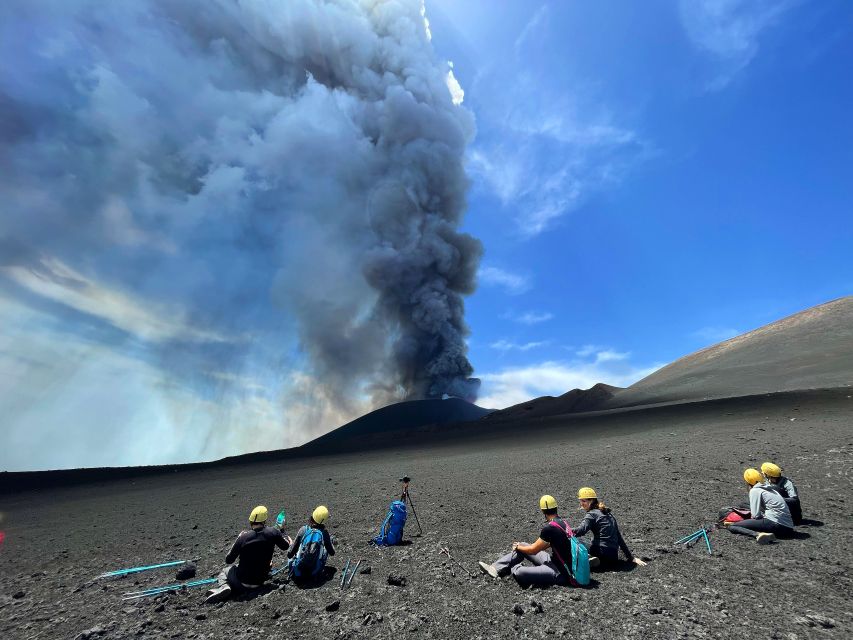
After the high-altitude viewpoint, the 4×4 takes you to the north side of one of Etna’s large craters. Here the longer walk begins, continuing on foot toward the original meeting area at Piano Provenzana.
One memorable stop is the fracture known as the north-side Rift. A rift is a long zone of weakness where magma can move through the volcano’s outer layers. Seeing one on the ground gives you a better sense of Etna as a system of cracks and vents, rather than a single hole at the top.
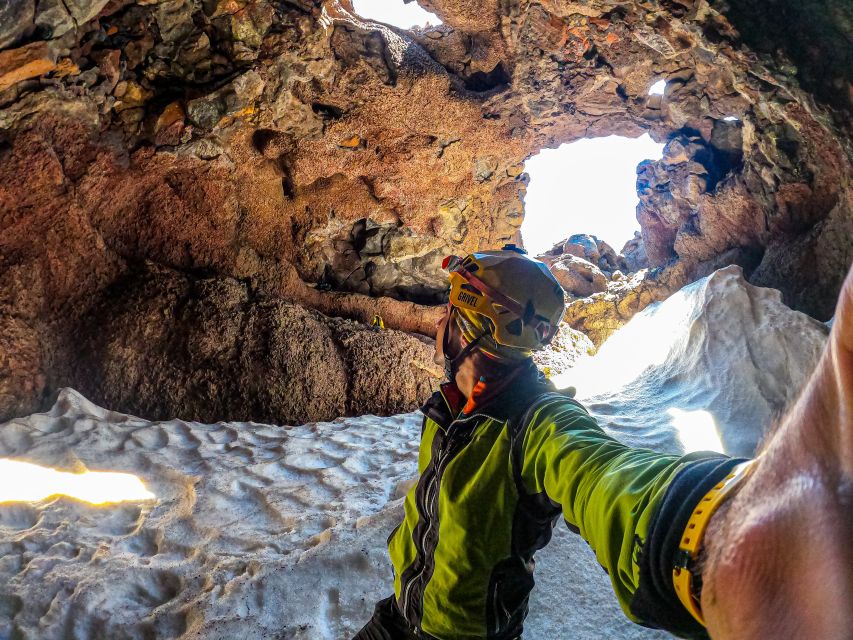
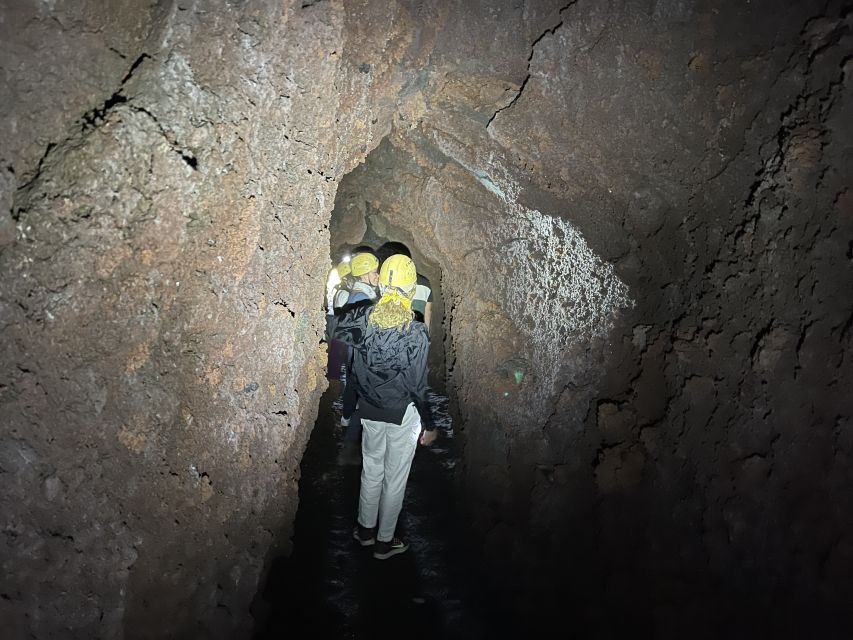
The route also reaches the craters created by the February 24, 1947 eruption. You enter the chimney of an intact volcanic cone while wearing a protective helmet. You also go inside the mouths that produced lava flows. These enclosed sections are unusual and help explain how molten material moved from below ground to the surface.
This part will appeal to anyone who likes geology presented through direct observation. You are not just told that an eruption happened. You can walk into the structure that carried the material upward. If you have claustrophobia, however, the enclosed volcanic passages are a clear reason to skip this excursion.
Six kilometers through Etna’s eruption zones
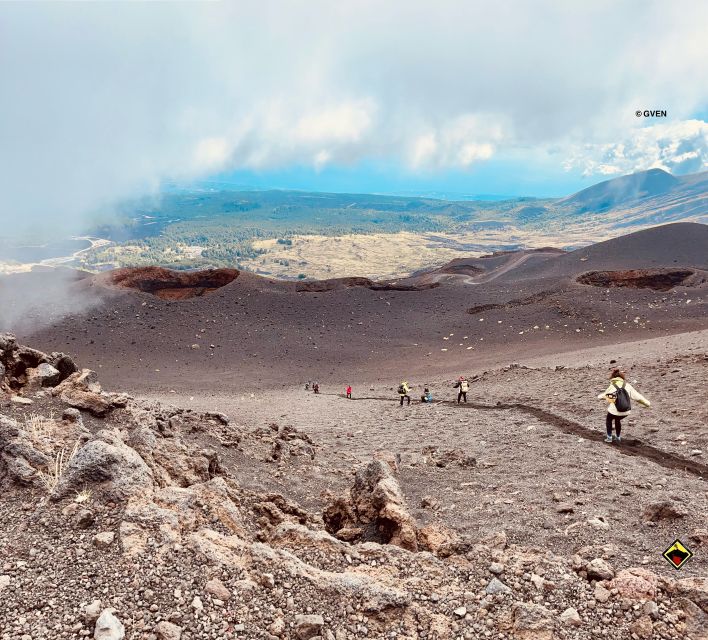
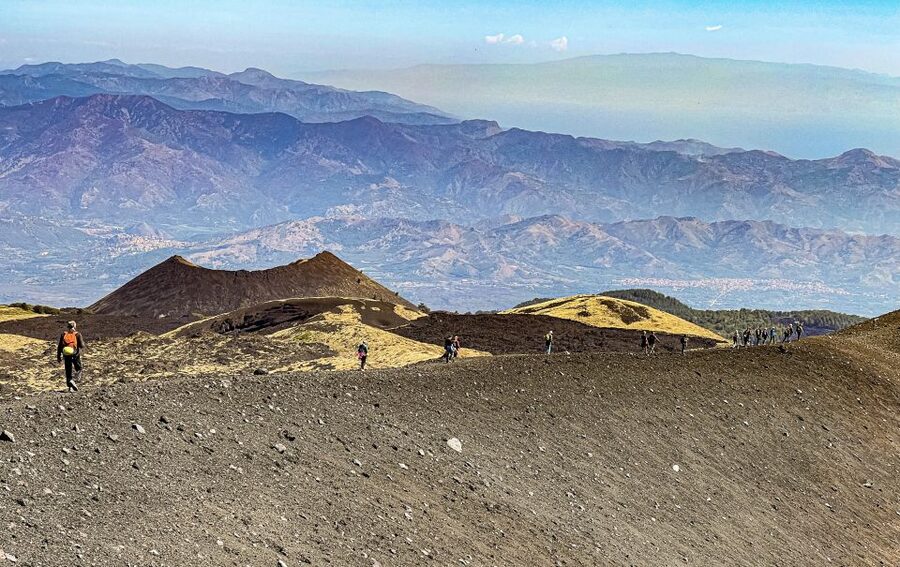
The main walk continues along the edges of large explosive craters and down slopes of loose volcanic ash. The route links cones created by eruptions in 1911, 1914 and 1924, 1809, 1874, 1879, 1923, 1974 and 1975, and 2002. Each date marks another episode in Etna’s long pattern of side eruptions.
You will not experience these as a neat museum sequence. The craters are spread across rough ground, and the path can feel wild. That is part of the appeal, but it also means you need balance and patience. Ash can slide under your boots, and the crater edges may cause dizziness for anyone prone to vertigo or fear of heights.
The route is described as about 6 kilometers to Piano Provenzana. Much of it is a descent, but downhill walking on loose ash can tire your legs and knees. Trekking poles are supplied, and I would use them from the start rather than saving them for the steep parts.
The group is divided among guides according to numbers and languages, which helps avoid one large crowd moving through narrow volcanic features. Tours operate in French, Italian, and English. If you want detailed explanations, check that your preferred language is available when booking.
What the guide adds to the walk
A volcanological guide changes the experience from a scenic hike into a lesson you can touch. The guide explains fractures, lava channels, cones, and eruption patterns while you stand beside them. The timing matters because the explanation is tied to the exact rock or opening in front of you.
Ciccio is one guide associated with this experience. His commentary covers scientific details and the history of eruptions, including a careful explanation of how an eruption mechanism works inside a volcanic cone. If he leads your group, expect the teaching to be a major part of the outing rather than a short introduction at the start.
The guide also manages the safety side. Etna is active, and rules can change with volcanic activity, weather, or official orders. The guide decides how far the group can go and which route is safe. That is one reason a self-guided walk is not an equal substitute here.
Who will enjoy this Etna trek
I recommend this for moderately trained hikers who want the volcano itself to be the main attraction. It suits you if you enjoy uneven paths, can handle a high-altitude walk, and would rather examine eruption sites than spend the day at a busy viewpoint.
It is also a smart choice if summit crater access is closed. You still get high-altitude views and a serious volcanic route without ignoring safety restrictions.
I would not choose it for a relaxed family outing, a first short walk in hiking shoes, or a day built around comfort. The activity is not suitable for people with mobility impairments, back problems, heart conditions, breathing problems, vertigo, fear of heights, claustrophobia, epilepsy, recent surgery, or little walking experience. It is also not suitable for people over 95 years old.
Bring lunch and drinks because neither is included. A snack is sensible too, especially since the route combines transport, a high-altitude viewpoint, and several hours on foot. The information gives a four-hour duration, though the actual pace will depend on the group, stops, weather, and safety decisions.
Is the 62.63-euro price good value?
The headline price looks attractive, but you need to add the 50-euro 4×4 charge and the 3-euro parking fee. Your basic outlay is therefore about 115.63 euros per person, before lunch, water, and any travel to the meeting point.
For that amount, you receive an authorized volcanological guide, accident insurance, trekking poles, protective helmets, hiking shoes, warm jackets, extra socks, and a backpack. You also receive the off-road transport needed to reach the upper route, although that transport is paid separately.
I think the value is solid if you want a specialist guide and access to places you would not sensibly visit alone. It is less compelling if you only want a quick view of Etna’s summit, since the route spends its time on geology, craters, and eruption vents rather than a simple summit photo.
Free cancellation is available up to 24 hours before the start, and you can reserve and pay later. The activity requires at least eight participants. If that minimum is not reached, the trek may be cancelled. Bad weather can also lead to cancellation or postponement, with notice given as early as possible.
Should you book this wild-side Etna trek?
Book it if you want the north slope at its most volcanic and least developed, and if you are happy to pay the extra transport charge. The intact chimney, the 1947 craters, the north-side Rift, and the long chain of eruption sites give you far more substance than a quick stop beside a crater rim.
Skip it if you need an easy path, guaranteed clear views, summit access, or a tour with no added costs. For the right walker, this is one of the better ways to understand Etna: not as a peak to conquer, but as a restless field of vents, fractures, ash, and old lava.
FAQ
Where does the Etna trek start and finish?
It starts and finishes at Chiosco Bar Mareneve, beside the winter ski chairlift. The bar is the second house of the four buildings in the parking area.
How much does the 4×4 transport cost?
The 4×4 costs 50 euros per person, paid on the spot. It carries the group from about 1,800 meters to 2,800 meters and later from about 2,800 meters to about 2,500 meters.
Is the 4×4 transport included in the listed price?
No. The listed 62.63-euro price covers the guide service. The 4×4 transport is an additional local payment, and parking costs 3 euros for the day.
What languages are available?
The tour is available with a live guide in French, Italian, or English.
What equipment is provided?
The activity provides trekking poles, protective helmets, trekking shoes, warm jackets, extra socks, and a backpack. You should still bring a windbreaker, sunglasses, sunscreen, drinks, snacks, long trousers, comfortable clothing, and a rain jacket.
Can the route change because of volcanic activity or weather?
Yes. Authorized guides follow Civil Protection instructions and current safety rules. The final altitude and route may change, and the activity can be cancelled or postponed because of adverse weather or if the minimum of eight participants is not reached.
Latest treks added in Catania
- Trekking in the morning on Mount Etna★ 5.0 · 2 reviews
- Nature Reserve ,Trekking Eco Tour in Iblei National Park★ 5.0 · 27 reviews
- Sunset Trekking on Mount Etna★ 5.0 · 3 reviews
- Mount Etna Advanced Trekking: Private Full-Day Tour from Catania★ 5.0 · 21 reviews
- Etna trekking and wine tasting★ 5.0 · 28 reviews
- One Day Tour in Catania and Trekking on Etna★ 5.0 · 2 reviews
- From Catania: Private mt. Etna trekking and pic-nic★ 5.0 · 37 reviews
- Piano Provenzana: Guided Mt. Etna Snowshoeing Trek★ 5.0 · 3 reviews
Volcano Treks, compared.
Mount Etna: Trek to 3000m with cable car and 4×4
Read our review →
Etna: summit craters trekking with volcano guide 3350mt
Read our review →
Mount Etna Trekking Tour Beyond the Tourist Trails
Read our review →
Mount Etna: Guided Trek 3,000 Meters to the Summit
Read our review →
Etna Sunset Tour: Volcano trek, Cave & tasting from Catania
Read our review →
Browse the lists this tour appears in