
REVIEW · ADDIS ABABA
4 Day Trekking Simien Mountains
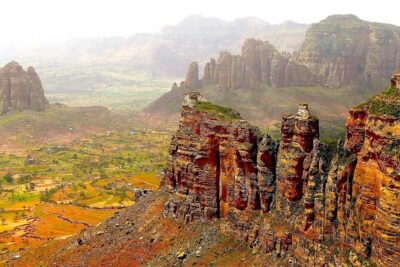
The Simien Mountains give you Ethiopia at its most dramatic: sheer cliffs, high plateaus, deep gorges, giant lobelia, and gelada baboons grazing beside the trail. I like the way this trek links several camps instead of reducing the park to a quick viewpoint stop. You get time to walk through fields, cross valleys, and see how local paths connect villages and high pastures.
I also like that the $450 price includes the big practical pieces, including park fees, guide, scout, mules and handler, transport, three nights of accommodation, and all listed meals. The main catch is important: the meeting point is given as Cameron Street in Addis Ababa, while the day-by-day plan begins in Gondar. Confirm the actual start city and transport plan before paying.
Key points to know before booking
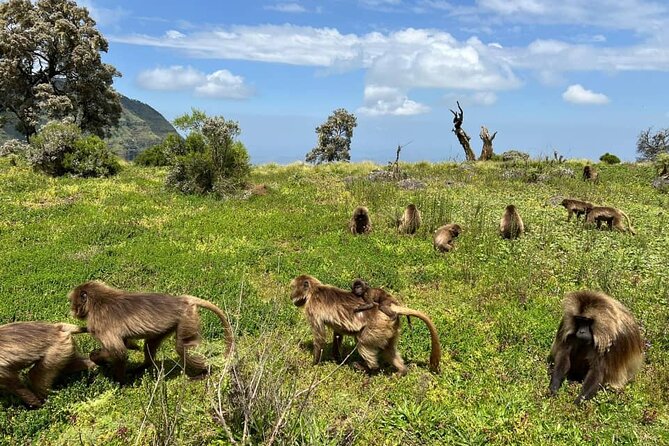
- Gelada baboons appear early: You may see them on the first day and again around the fields near Gich.
- The trek reaches serious altitude: Buwahit is listed at 4,430 meters, while Inatye reaches 4,070 meters.
- Day three is the hardest: Expect six to eight hours of walking, steep sections, and a descent to Chennek.
- The price covers useful support: A guide, scout or ranger, mules, mule handler, accommodation, meals, transport, and entrance fees are included.
- The route has real variety: You move from escarpment edges and waterfalls to high pasture, volcanic cliffs, valleys, and summit viewpoints.
- The group stays small: The minimum is two people and the maximum is ten.
Why four days is the right length for Simien
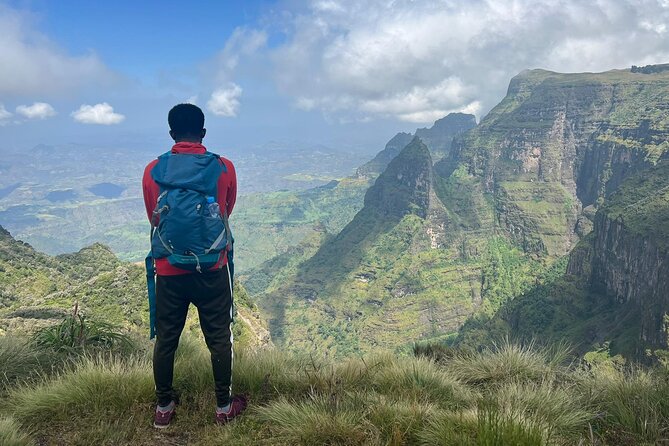
A short visit to Simien Mountains National Park can give you a fine view, but it cannot show you how the park changes as you walk through it. This four-day route moves from the northern edge of the escarpment toward Gich and Chennek, with long stretches on trails used by local people.
That matters because the park is not just a collection of lookout points. The pleasure is in the change of scale. One moment you are walking through open fields with gelada baboons nearby. Later, a narrow ridge reveals a waterfall dropping hundreds of meters into a gorge. High pasture then gives way to bare cliffs and broad views toward Ethiopia’s highest summit, Ras Dejen.
You should think of this as a proper mountain trek, not a sightseeing circuit with a few optional walks. The published fitness level is moderate, but the distances and altitude make that label worth taking seriously. Day one is fairly gentle, while days two, three, and four demand more endurance. The route includes climbs, descents, narrow ridges, and high viewpoints.
More four-day treks in Ethiopia
- 4 days semien mountain national park trekking,
★ 5.0 · 11 reviews - 4 Days Trekking to Simien Mountain National Park
★ 5.0 · 7 reviews - Trekking in Ethiopia’s Lalibela Wollo Highland 4 Days / 3 Nights
★ 5.0 · 6 reviews
The Gondar to Sankaber approach on day one
The first day begins with an early road journey from Gondar to Debark, about 100 kilometers and roughly three hours by four-wheel-drive vehicle. At the park headquarters in Debark, you obtain permits and meet the local guide and scout before continuing for about an hour into the park.
There is a practical inconsistency in the supplied booking details. The meeting point is listed at Cameron Street, Oasis Building, Cameroon Street, Addis Ababa, with a 9:00 a.m. start. The itinerary itself says the early start is from Gondar at 9:00 a.m. That is not a small detail. Addis Ababa and Gondar are far apart, and the four-day schedule does not explain a same-morning transfer between them. Ask the operator to confirm the true departure city, pickup time, and whether you need to reach Gondar independently.
Once the walking begins, day one is the easiest introduction to the park. The three to four hour hike follows the northern edge of the escarpment, with views over the foothills and plains of northern Ethiopia. This is a good first stage because you can get used to the trail and altitude before the longer days arrive.
Gelada baboons are one of the early highlights. They are a defining sight in Simien, and seeing them along the route gives the walk a strong sense of place. The day ends at Sankaber campsite, where tea and coffee are prepared and camp is set up before you arrive.
That camp arrangement is useful after a long vehicle transfer and a first walk. Still, you should expect camping conditions rather than hotel comforts. The supplied details confirm accommodation but do not describe tent style, bedding, showers, or toilet facilities, so ask what is provided if those details matter to you.
Gich, the Jinbar waterfall, and a five-hour second day
After breakfast, the route follows the northern escarpment eastward before dropping toward the Kaba valley. You then climb toward Gich Abyss and cross a narrow ridge to a cliff with broad views into the abyss and across the Simien foothills.
The scenery becomes more dramatic here. To the east, the Jinbar River plunges about 500 meters into the gorge. You continue for roughly two hours before stopping for lunch beside the Jinbar River. That timing makes day two feel like a full mountain day rather than a string of quick photo stops.
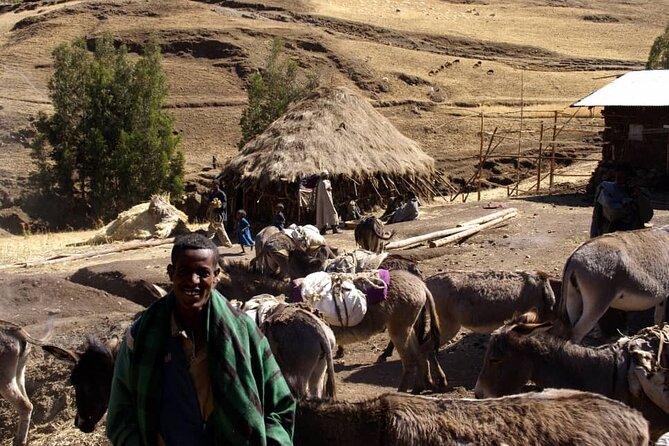
From the river, the trail climbs through barley fields toward Gich village. Gelada baboons may be seen in these fields, a reminder that the route passes through working countryside rather than an empty wilderness. The final walk to Gich campsite is short, and the camp sits high above the village.
I like this section because it gives you both the park’s grand scale and its human setting. The gorge and waterfall deliver the big views, while the barley fields and village show how people use the high ground. The narrow ridge may be uncomfortable for anyone uneasy with exposed heights, and the climb after lunch can feel demanding even though the day is listed at about five hours.
The supplied itinerary text cuts off while describing the camp, so the exact evening schedule and campsite facilities are not stated. Do not assume there is electricity, hot water, or a restaurant. Meals are included, with breakfast, lunch, and dinner listed for the trek.
Imet-Gogo, Inatye, and the demanding third day
Day three is the most strenuous section in the schedule. The walking time is given as six to eight hours, with a route across high pasture and fields of giant lobelia. These plants give the plateau a distinctive look and help explain why this is a natural-history trip as much as a hiking trip.
The trail reaches the cliffs of Imet-Gogo at 3,926 meters, then continues along the precipitous edge toward the high viewpoint of Saha and onward toward Imet-Gogo. The route description also points to striking domes in the distance, followed by a descent into the Jinbar River Valley.
From below, the view back toward Imet-Gogo and the volcanic formations changes completely. The cliffs can look as if huge sections of the mountain have been torn away. This contrast between high ridge and deep valley is one of the strongest visual moments of the trek.
You then climb to Inatye, listed at 4,070 meters, for lunch. At this height, the view is the reward, but the altitude is also the day’s main concern. The tour only says that participants should have moderate fitness. It does not provide an acclimatization plan, medical support details, or altitude guidance. If you have previous difficulty at high elevation, ask the operator specific questions before booking.
After lunch, the route descends for about two hours on a steep trail to Chennek. The descent can be harder on your knees than the climb, especially after a long morning. This is the day when proper walking shoes, careful pacing, and a willingness to let the guide set the rhythm matter most.
More Trekking Tours in Ethiopia
- Trekking at Bale Mountains 3 Days
★ 5.0 · 28 reviews - 3 Days Bale Mountains Trekking
★ 5.0 · 19 reviews - 6 Days Bale Mountains Trekking
★ 5.0 · 10 reviews - 5-Day Northern Ethiopia Tour : 3D Simien Mountains Trek & Axum.
★ 5.0 · 9 reviews
Chennek to Buwahit at 4,430 meters
The final walking day is described as a five to six hour round trip from Chennek camp to Buwahit, the second-highest peak in the Simien Mountains. The summit reaches 4,430 meters, making this a serious high-altitude outing even if the round-trip distance is shorter than day three.
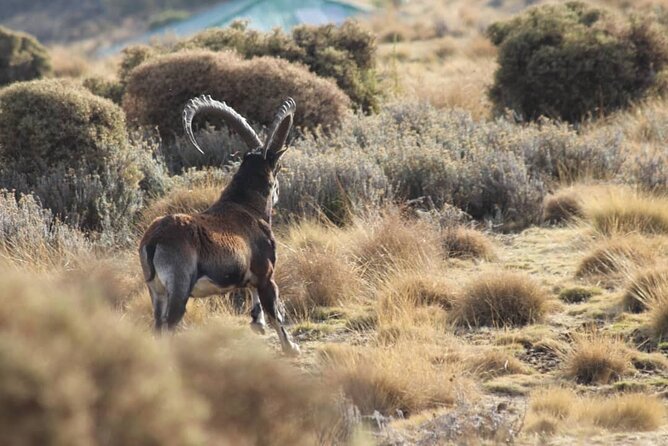
As you climb, you may spot Walia ibex. The route also offers the chance, if fortune is on your side, to see the Simien fox, an animal endemic to Ethiopia. The information does not promise either sighting, and you should treat wildlife encounters as possibilities rather than targets.
From Buwahit, the views extend west beyond Chennek and east toward Ras Dejen, Ethiopia’s highest peak at 4,543 meters. That contrast is a fitting finish to the route: broad valleys on one side, the country’s highest summit on the other.
You return to Chennek for lunch. The itinerary then says the afternoon begins, but the supplied description ends before explaining what follows. Ask whether the afternoon includes another walk, a drive, or simply time at camp. This missing detail is another reason to request a final day-by-day plan before departure.
What the $450 price really covers
At $450 per person, the trek offers solid value if all the listed inclusions are delivered. You are not paying only for a guide and a park entry. The package includes an air-conditioned vehicle, bottled mineral water, park entrance fees, a guide, a scout or ranger, mules and a mule handler, accommodation, government taxes, and three breakfasts, four lunches, and three dinners.
The mule support is especially useful on a multi-day mountain route. The supplied information does not state exactly how much personal luggage each mule carries, so ask about baggage limits and what you need to carry during the day. The price also does not include drinks, so bring money for anything beyond the provided bottled water and meals.
The price looks strongest for a small group. With a maximum of ten people, the guide should have a better chance to manage walking pace and keep the group together than on a large coach-style excursion. The minimum is two people, so the trip can operate for a small party, subject to the operator’s confirmation.
Accommodation is included, but its standard is not described. That uncertainty does not necessarily reduce the value, since camps in a national park are part of the experience. It does mean you should ask about tents, sleeping equipment, washing facilities, and what happens if weather affects the planned camps.
Guides, scouts, and the human side of the trek
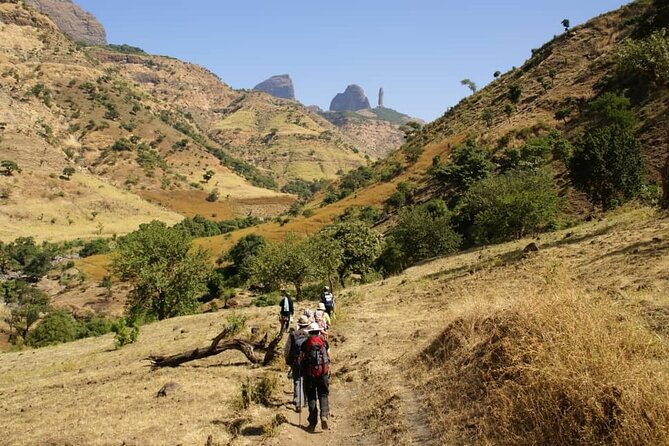
The route includes both a guide and a scout or ranger. That combination matters in a national park with wildlife, steep terrain, and multiple village trails. The operator’s correspondence names Yigzaw, also called Mickey, as managing director, and refers to a guide named Mulate. You should ask whether Mulate will lead your departure or whether another guide will be assigned.
That question is worth asking because the quality of a mountain trek depends heavily on the person managing the pace, route, meals, and camp coordination. One account of the trek specifically praised Mulate, so requesting him may be useful if he is available. Do not assume he is included unless the operator confirms it.
The presence of a scout also supports the park experience. You are not simply following a road to a viewpoint. The route uses trails between villages and high pastures, and the local team helps connect the walk to the place itself.
Who should book this Simien trek
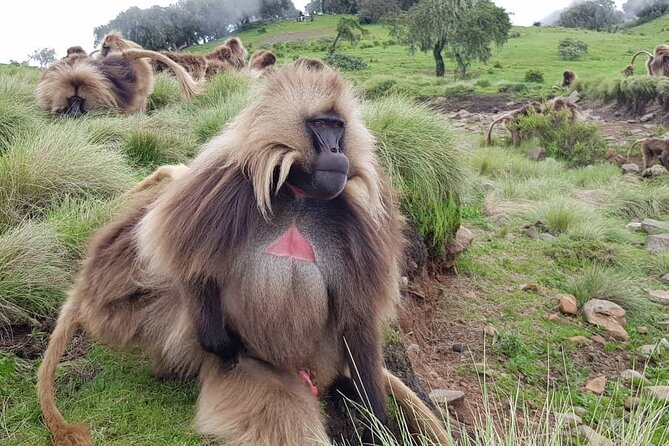
I would recommend this trip to you if you want a proper four-day mountain route and are comfortable with basic camping. It suits people who care about wildlife and geology as much as summit views. The geladas, giant lobelia, Walia ibex, volcanic cliffs, and high-altitude ridges give the trip plenty to notice beyond the walking itself.
It is also a good fit if you want support without joining a large group. Transport, meals, park fees, mules, a guide, and a scout are already arranged. That removes much of the work involved in organizing a self-guided route.
I would be more cautious if you want a relaxed holiday with short walks and comfortable lodging. Day three can last up to eight hours, day four reaches 4,430 meters, and the route includes steep trails and exposed viewpoints. The moderate fitness label should not be read as easy.
Before booking, get clear answers on four points: the Addis Ababa versus Gondar departure, the exact campsite facilities, the luggage arrangements with the mule team, and the unfinished afternoon plan on day four. Those answers will tell you whether the trip matches your expectations.
Booking terms and final verdict
The activity accepts a minimum of two and a maximum of ten people. Confirmation is provided at booking, and free cancellation is available if you cancel at least 24 hours before the local start time. Cancellations or changes made inside that 24-hour window are not refundable.
Should you book it? Yes, if you want Simien’s finest features in one supported route and can handle long, high-altitude days. The strongest parts are the variety of scenery, the chance to see geladas and Walia ibex, and the number of practical costs included in the $450 price.
I would not book until the departure point is confirmed in writing. Once the Gondar and Addis Ababa confusion is settled, this looks like a well-priced way to experience the park beyond its roadside viewpoints.
FAQ
Where does the trek start?
The meeting details give Cameron Street, Oasis Building, Cameroon Street, Addis Ababa, at 9:00 a.m. The day one itinerary says the trip starts from Gondar at 9:00 a.m. Confirm the correct departure city with Danakil Depression Tours before booking.
How long is the experience?
The trek lasts approximately four days and includes three nights of accommodation.
How many people can join?
The minimum group size is two people, and the maximum is ten.
What fitness level is required?
The activity states that participants should have a moderate physical fitness level. The route includes walks of up to six to eight hours, steep trails, and high points reaching 4,430 meters.
Are park entrance fees included?
Yes. All park entrance fees are included in the price.
Are meals included?
Yes. The package includes three breakfasts, four lunches, and three dinners.
Is mule support included?
Yes. Mules and a mule handler are included.
Are drinks included?
No. Drinks are not included. Bottled mineral water is listed among the inclusions, but other drinks require separate payment.
Latest treks added in Ethiopia
- Lalibela 2-Day Eco Trekking Tour★ 5.0 · 3 reviews
- Trekking in Ethiopia’s Lalibela Wollo Highland 4 Days / 3 Nights★ 5.0 · 6 reviews
- 3-days Scheduled Lalibela Churches & Abune Yosef Trekking★ 5.0 · 7 reviews
- Lasta Mountains: Highland Eco Trekking Tour in Lalibela★ 5.0 · 4 reviews
- 4 Days Lalibela Tour with Day Trek to Hudad★ 5.0 · 2 reviews
- Day trek to Simien Mountain★ 5.0 · 5 reviews
- Day trek to Simeien Mountains★ 5.0 · 3 reviews
- Simien Mountains National Park – 7 Day Trek★ 5.0 · 5 reviews
Addis Ababa Trekking Tours, compared.
Northern Ethiopia & Trekking Simien Mountains , 10 Days
Read our review →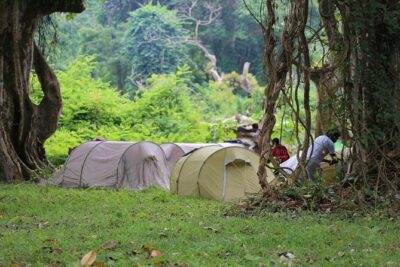
One Day Trekking Tours To Mount Zuqualla And Lake Zuqualla
Read our review →Browse the lists this tour appears in