
REVIEW · INDONESIA
Sidemen Trekking: A Walk from a Different Perspective
Sidemen’s best scenery is not viewed from a road or a polished lookout. It is found on narrow paths between rice paddies, where farmers plow, plant, weed, and harvest under Mount Agung. This two-hour walk through real village life gives you a close look at the work behind Bali’s famous rice terraces.
I like the quiet route and the way local guides explain the Subak irrigation system, crops, temples, and village customs as you walk. I also like the one-way design, which keeps the scenery changing instead of sending you back along the same track. The catch is that some paths are narrow, slippery, and uneven, so this is not a casual stroll in sandals.
Key points at a glance
- Rice farming up close: Walk beside working fields and learn how Balinese farmers plow, plant, cultivate, and harvest.
- A true one-way route: The trail links market, village, bridge, plantations, and terraces without repeating the same path.
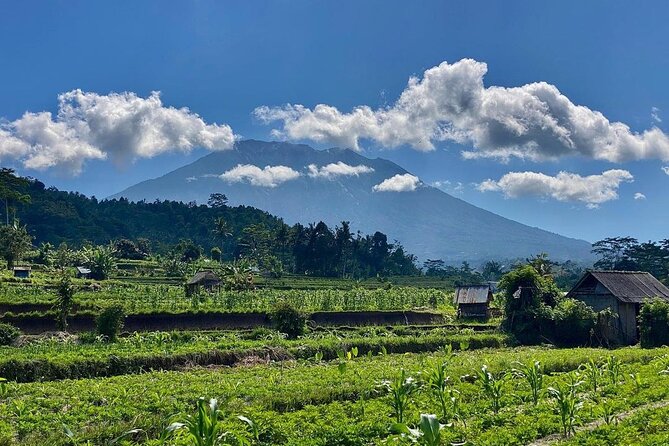
- Mount Agung views: Clear conditions can bring fine views toward Bali’s highest mountain and the Sidemen valley.
- The yellow bridge: Cross Jembatan Kuning Tukad Yeh Unda, a narrow wooden bridge used by people and motorbikes.
- Small groups: The group is limited to 10 people, with an English-speaking guide and bottled water included.
- Good value at $13: For a guided walk lasting about two hours, the price is modest, especially if you want help finding paths you would likely miss alone.
Why this Sidemen walk feels different from a standard Bali outing
Sidemen is a good place to see Bali beyond beach clubs, traffic, and photo stops designed for a quick picture. The village sits among rice terraces and mixed plantations, with daily work still visible along the paths. You may see farmers tending fields, villagers passing between homes, and temples used for local prayer.
The value here is not a long hike or a dramatic physical challenge. It is the setting and the access. The guide leads you along narrow field walls and local routes that can be difficult to find without someone from the area. Guides such as Adi, Adidas, Daria, Gede, and Komang have been praised for explaining farming, plants, local customs, and village life in clear English, often with a good sense of humor.
The route rises and falls, but the pace is generally relaxed. You should still expect damp ground, high grass, slippery sections, and some balancing along narrow paths. That combination makes sturdy shoes more important than speed or fitness.
More Trekking Tours in Indonesia
- Bali: Mount Batur Sunrise Trek With Guide and Breakfast
★ 4.8 · 3,461 reviews - Mount Batur Sunrise Trekking Private All Inclusive
★ 5.0 · 906 reviews - Mount Batur Sunrise Trekking Private Tour with Breakfast and Hotel Transfer
★ 5.0 · 885 reviews
Starting at Pasar Sidemen before the fields
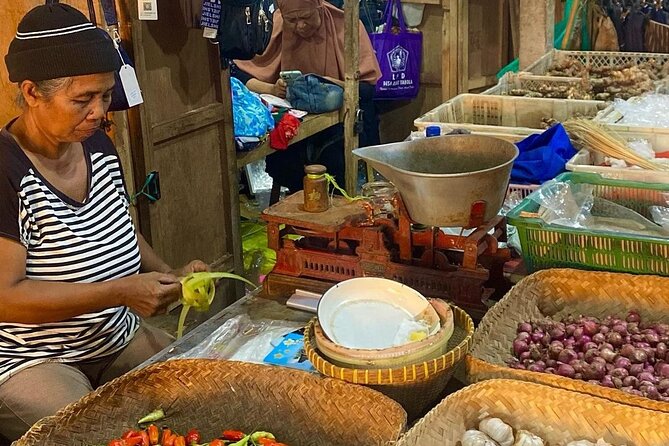
The walk begins at Toko Upa Boga Pertenunan, next to Pasar Sidemen on the main road. Look for the shop marked Upa Boga. Your guide meets you there, so you do not need to wander around the market searching for a tour office.
If you book a morning departure, you can spend about 10 minutes looking around the traditional market before setting off. Pasar Sidemen is open from 5:00 AM to 10:00 AM, which makes an early start the best choice if the market matters to you. A later walk still covers the same countryside, but the market may already be closed.
The market stop is brief rather than a full food tour. You get a quick look at the place where local buying and selling begins before the route turns toward the paddies. It is a useful introduction because the rest of the walk shows how some of those crops are grown.
Finding the quiet paths and mixed plantations
After the market, the route leaves the main road and heads toward the rice fields. The first scenic section lasts about 35 minutes and includes a photo stop, village paths, plantation areas, and views over the surrounding countryside.
This is where the tour earns its small price. You are not simply pointed toward a terrace and left to take pictures. The guide helps you understand what you are seeing, including native plants, crops, and the way the fields fit into village life. The mix changes as you walk, with rice, other plantings, homes, lanes, and open views appearing in turns.
The scenery depends on weather and farming conditions. Rice fields do not look identical all year. Some may be bright green, while others may be recently harvested, muddy, or newly planted. That is part of the point: you see working farmland rather than a fixed display prepared for visitors.
Some paths are only narrow strips between fields. Wet weather can make them slippery, and long grass may bring insects. Long trousers are a sensible choice if you dislike brushing through grass. Bring a rain jacket during Bali’s wetter periods, since a little rain does not necessarily stop the walk.
Crossing Jembatan Kuning Tukad Yeh Unda
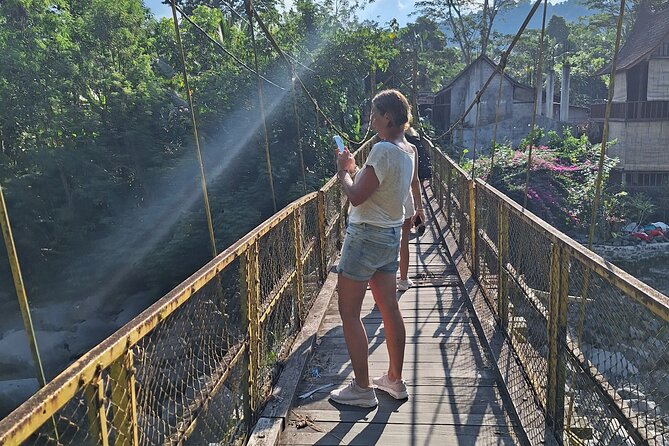
The yellow bridge is one of the walk’s more memorable stops. Jembatan Kuning Tukad Yeh Unda is a wooden bridge used by both pedestrians and motorbikes, so it is functional rather than a carefully staged attraction.
The bridge can feel slightly shaky, especially if you are not used to narrow rural crossings. Your guide helps keep the group moving safely, and there is time for a photo stop. Take care with your footing and do not rush across simply because someone behind you is waiting.
This part also shows how closely transport, farming, and village paths are linked. A bridge like this is not isolated scenery. It connects homes, fields, and local routes, giving you another look at how people move around Sidemen.
Another trail to compare in Indonesia:
- Private Mount Batur Sunrise Trekking Tour
★ 5.0 · 634 reviews - Mount Batur Sunrise Trekking (Private Tour and Breakfast at Restaurant)
★ 5.0 · 598 reviews - Bali: Munduk Waterfalls Trek, Twin Lakes and Temple Tour
★ 4.8 · 545 reviews - Private Tour Mount Batur Sunrise Trekking and Natural Hot Spring
★ 5.0 · 431 reviews
Walking through Dukuh village
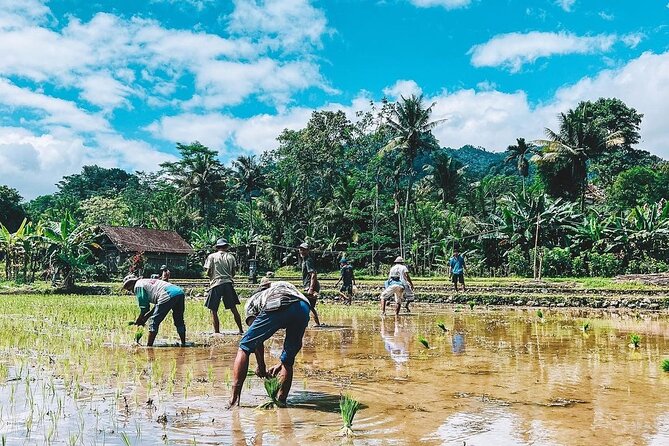
The route continues into Dukuh village for about 25 minutes. Here, the walk shifts from open fields to the quieter details of village life. You pass local homes, lanes, and a temple used for prayer by villagers.
A guide adds real value at this point. Without one, you might notice the temple but miss its place in community life. You can ask about Balinese customs, farming, local plants, and the way the village is organized. Guides from the Sidemen area can also explain what you are seeing from personal experience, rather than giving only general information about Bali.
The walk moves up and down streets before returning to the rice fields. That variety keeps the route from feeling like a single repeated view, though it also means the walk is not completely flat. If you have low fitness, knee trouble, or difficulty with uneven ground, consider this carefully.
The Babakan Dukuh rice terraces
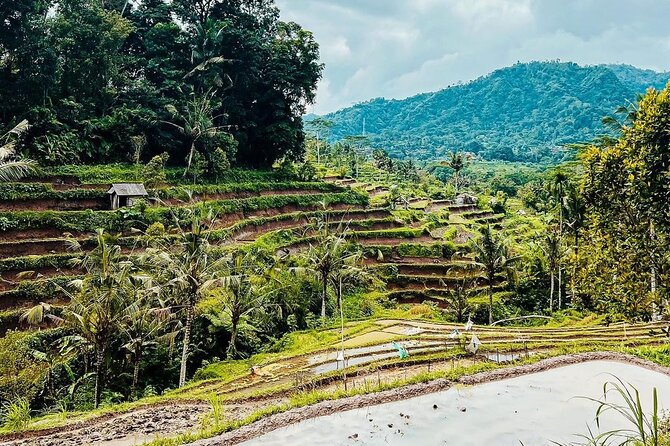
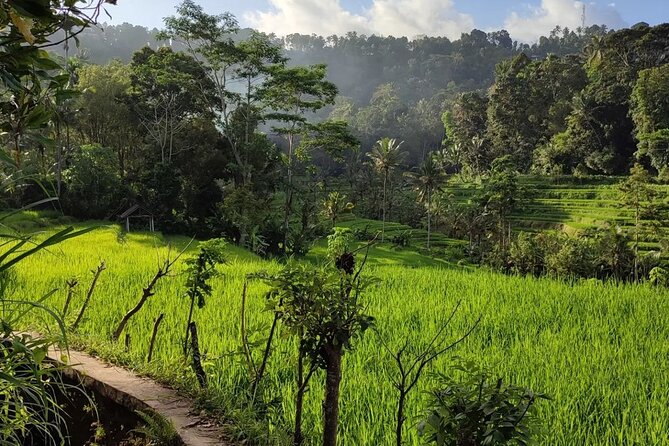
The longest section is the 45-minute walk through Babakan Dukuh Rice Terrace. This is the heart of the experience, with scenic views, field paths, and a closer look at how rice is grown.
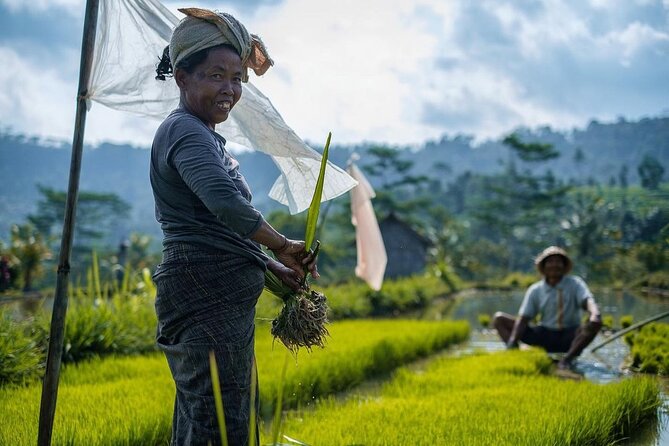
You may see farmers plowing, preparing soil, planting seedlings, cultivating the crop, or bringing in a harvest. The exact work depends on the season, but the guide can explain the stages and point out how the fields are managed. This turns a pretty view into a working system you can understand.
The traditional Subak irrigation network is another key part of the walk. Water is shared through channels that support the rice fields, and the route passes through the Subak of Ogang. Your guide explains how the irrigation system supports farming and why it matters to the communities using the land.
This is also the section where footwear matters most. The paths may be narrow, and wet field edges can be slick. Sports shoes or hiking shoes with good grip are required by the operator, while sandals and flip-flops are not allowed. You do not need heavy mountain equipment, but you do need shoes you trust on damp ground.
Look toward Mount Agung when the air is clear. Views of the mountain and the valley are among the strongest reasons to choose this walk. Clouds can hide the peak, of course, so treat the view as a welcome bonus rather than a guarantee.
Finishing at Warung Ume Anyar

The walk ends at Warung Ume Anyar in Ogang Village, not back at the market. This one-way finish is useful because you keep moving through new areas, but it requires a little planning.
Arrange your ride before the walk begins. If you have a private driver, ask for pickup at the restaurant about two to two and a half hours after the tour starts. The timing gives you a small cushion in case the group takes longer over photos or wet sections.
You can walk back to the starting point if necessary. It is about 3 kilometers along the main road and takes roughly 30 to 40 minutes, but this is not the most appealing option after the field walk. A prearranged pickup is easier.
If you are staying in Sidemen, ask your hotel to arrange transport to the meeting point. Grab is not recommended for pickup from some Sidemen hotels, since certain properties do not allow Grab drivers to collect passengers. Drop-off is a different matter, but you should confirm your plan with the hotel rather than assume the app will solve everything.
What the $13 price really gets you
At $13 per person, this is one of the more useful low-cost activities in Sidemen. The fee includes a guide and bottled water, while hotel transport is separate. You are paying mainly for local route-finding and explanation, not for an elaborate attraction.
That distinction matters. You could walk parts of Sidemen on your own, but the field paths are not always obvious, and the route is designed to connect several areas in one direction. A guide also helps you avoid wandering onto the wrong track, explains the irrigation channels, and keeps the group together on slippery ground.
The group limit is 10 people. That is small enough for questions and photo stops without turning the walk into a large procession. The pace is generally easy, though the uneven route gives it more effort than the two-hour duration might suggest.
Free cancellation up to 24 hours before the activity and the option to reserve now and pay later add useful flexibility. Still, the main value is simple: you get a local walk, an English-speaking guide, and access to working countryside for less than the cost of many short Bali activities.
Who will enjoy this walk most

I would recommend it to you if you want to see how people in Sidemen live and work, not just photograph a rice terrace from a roadside viewpoint. It suits couples, solo visitors, families with older children, and anyone who prefers a quiet morning or afternoon outdoors.
It is also a good choice after spending time in Ubud. The rice fields may look familiar in photographs, but Sidemen offers a quieter setting and a closer connection to village farming. You are more likely to focus on irrigation, crops, and daily routines than on staged photo scenes.
The activity is not suitable for children under 5, pregnant women, people with heart problems, people over 60, or people with a low level of fitness, according to the stated restrictions. Those limits are worth taking seriously because the route includes uneven ground, inclines, narrow paths, and slippery sections.
If you are steady on your feet and comfortable walking outdoors, you should manage the route at its relaxed pace. Bring sunglasses, a hat, sunscreen, and water, along with proper hiking or sports shoes. A rain jacket and long trousers are sensible additions, particularly when the weather is unsettled or the grass is high.
A few practical choices that improve the experience
Choose a morning start if you want to see Pasar Sidemen before the walk. The market closes at 10:00 AM, so an afternoon departure will not include that part.
Allow time for photographs. Guides such as Daria, Adidas, Adi, and Komang have been praised for stopping at good viewpoints and helping take pictures. You will enjoy the walk more if you are not trying to hurry through every section.
Ask questions as you go. The best parts of the walk are the explanations about rice farming, Subak irrigation, native plants, temple use, and village customs. The route itself is beautiful, but the information gives the scenery meaning.
Expect the trail to change with the weather. Rain can make field walls slippery, while dry conditions may leave the paths dusty or hard. Good grip matters more than stylish footwear.
Should you book Sidemen Trekking?
Book this walk if you want a modestly priced, local-feeling way to see Sidemen’s fields and villages. The strongest reasons are the one-way route, the access to narrow rice paths, the chance to watch farming at close range, and the guides’ clear explanations of Balinese life.
Skip it if you want a flat paved walk, a guaranteed Mount Agung view, or a tour with hotel pickup and drop-off included. You also need to be comfortable arranging your own ride from Ogang Village and walking on slippery, uneven ground.
For most fit visitors staying in Sidemen, I think the $13 cost is easy to justify. It is short, practical, and more revealing than a quick viewpoint stop. Wear proper shoes, book a morning session if you want the market, and arrange your return ride before setting out.
FAQ
How long does the Sidemen trekking experience last?
The walk lasts about two hours. The route is one way and ends at Warung Ume Anyar in Ogang Village.
How much does the trek cost?
The listed price is $13 per person.
What is included in the price?
A guide and bottled water are included.
Is hotel pickup included?
No. Hotel pickup and drop-off are not included.
Where does the walk begin?
The meeting point is at Pasar Sidemen on the main road, near Toko Upa Boga Pertenunan and the shop marked Upa Boga.
Where does the trek finish?
The walk finishes at Warung Ume Anyar Restaurant in Ogang Village.
Can I visit the traditional market during the tour?
You can visit Pasar Sidemen briefly as part of the route. The market is open from 5:00 AM to 10:00 AM, so book a morning session if you want to see it open.
What should I wear?
Wear hiking shoes or sports shoes with good grip. Bring sunglasses, a hat, and sunscreen. Sandals and flip-flops are not allowed.
Is the route difficult?
The pace is generally relaxed, but the route includes narrow, uneven, uphill, downhill, and sometimes slippery sections. It is not intended for people with a low level of fitness.
Can children join the walk?
Children under 5 are not permitted. The stated restrictions also exclude pregnant women, people with heart problems, and people over 60.
Latest treks added in Indonesia
- Day Tour – Tumpak Sewu Waterfall and Goa Tetes Trekking via Malang★ 5.0 · 4 reviews
- 2Day – Semeru Trekking Adventure via Malang with Local Guide★ 4.5 · 2 reviews
- Rinjani Trekking 2D/1N Senaru Crater Rim★ 5.0 · 2 reviews
- Trekking Rinjani 1 Day Trek Senaru Crater Rim★ 5.0 · 3 reviews
- Rinjani Trekking 1 day Trek To the rim via senaru 2,642m★ 5.0 · 16 reviews
- Rinjani Trekking 2D1N Senaru Crater rim★ 4.5 · 9 reviews
- Popular Rinjani Trekking Tour Service To Summit For 2 Days Via Sembalun Trail★ 5.0 · 8 reviews
- Mount Rinjani 3D2N Private Trek – Summit, Crater Rim & Hot Spring★ 5.0 · 13 reviews
Indonesia Trekking Tours, compared.

Mount Batur Sunrise Trek With Guide and Breakfast
Read our review →
Mount Batur Sunrise Trekking Private All Inclusive
Read our review →
Mount Batur Sunrise Trekking Private Tour with Breakfast and Hotel Transfer
Read our review →
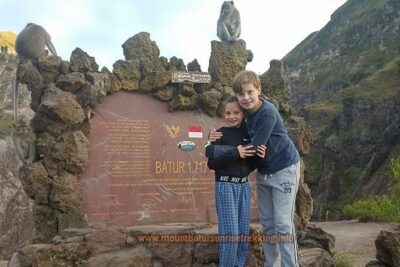
Mount Batur Sunrise Trekking (Private Tour and Breakfast at Restaurant)
Read our review →
Munduk Waterfalls Trek, Twin Lakes and Temple Tour
Read our review →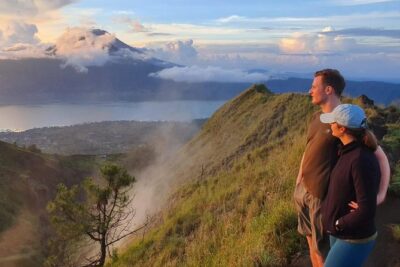
Private Tour Mount Batur Sunrise Trekking and Natural Hot Spring
Read our review →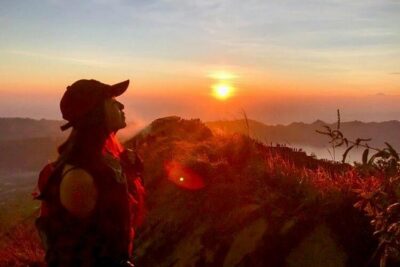
Private Tour : Mount Batur Sunrise Trekking With Private Guide
Read our review →Browse the lists this tour appears in