
REVIEW · KANDY
Knuckles Spice Trail Trek from Kandy
The best part of this Knuckles trek is the changing scenery. In one day, you move from tea plantations and mountain views to rice terraces, spice gardens, forest paths, and a waterfall pool cold enough to wake you right up. I like the way the walk connects nature with everyday village life, rather than keeping you on a marked path with no sense of the people who live nearby.
I also like the hands-on plant knowledge. Guides such as Lakmal and Ashoke explain tea, coffee, fruit, vegetables, herbs, and spices, and you may get to smell or taste some of them. The main drawback is the weather: rain can make the trail muddy, bring out leeches, and soften the mountain views with mist.
- A 10 to 15 kilometer route: Expect four to five hours of walking on a smooth medium-grade trail.
- A natural waterfall pool: Bring swimwear if you want a cold but memorable swim.
- Many types of scenery: Tea estates, pine and eucalyptus forest, rice terraces, spice gardens, and a cloud forest appear along the way.
- A village lunch: The day ends with picnic food or a fresh local meal, often rice and curry served in a family home.
- A private English-speaking guide: You can ask questions about plants, farming, food, and village customs as you walk.
- A full day from Kandy: Pickup is around 7:00 to 7:30 in the morning, with a return to Kandy later in the afternoon.
From Kandy to the Knuckles foothills
This is an eight-hour outing from Kandy, with about 1.5 hours of transport each way. Pickup is scheduled between 7:00 and 7:30 in the morning, and trekking begins around 9:30 to 10:00. That early start matters. You get the walking done before the afternoon heat, and the mountain air is usually at its freshest.
The exact road journey is not described in detail, so you should treat the transport time as an estimate. Traffic, road conditions, and the pickup point in Kandy may affect the schedule. The return to Kandy is planned for around 2:30 to 3:00 after the walk, but a 10 to 15 kilometer route, a swim, lunch, and mountain roads can take time.
This is a private group experience, which is useful on a nature walk. You can stop to look at an unfamiliar plant, ask about a spice, or adjust the pace without being tied to a large group. The guide speaks English, and the walking grade is described as smooth medium. That does not mean effortless. Four to five hours on uneven outdoor paths requires a reasonable level of fitness.
Tea estates and high mountain views
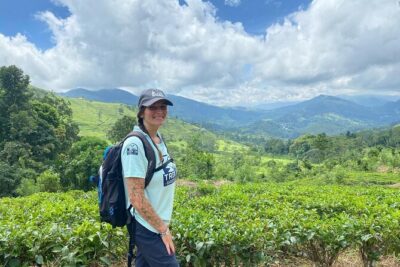
The first major change in scenery comes as you enter tea estate trails. Sri Lanka’s tea country is often pictured as neat rows of bushes on rolling hills, but this walk gives you a closer look at the working side of that setting. The guide can explain tea plants and the work involved before tea reaches a cup in Europe or elsewhere.
Cara, who took the walk in September, found the explanations about tea, coffee, fruit, spices, and plant use especially helpful. That is a good reason to keep your eyes open rather than treating the tea fields as a quick photo stop. Ask questions. The value here comes from understanding what you are seeing.
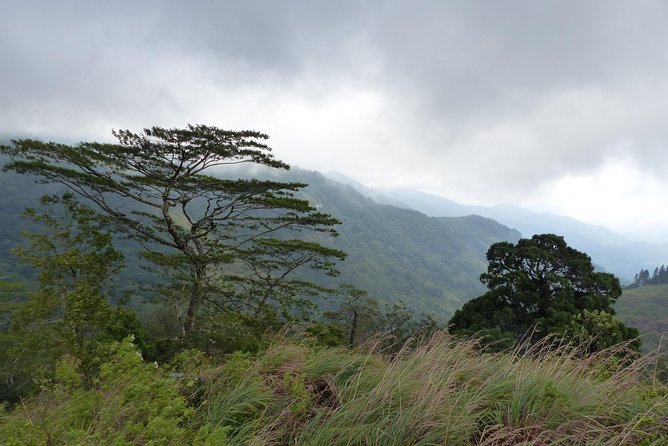
The route moves between open views and wooded sections. On clear stretches, you can see broad mountain scenery, while mist may cover the higher points. That mist is not a problem if you want a cool, atmospheric walk, but it can reduce the big views you may have hoped for. The Knuckles area is known for fast-changing mountain weather, so bring rain gear even if Kandy is dry when you leave.
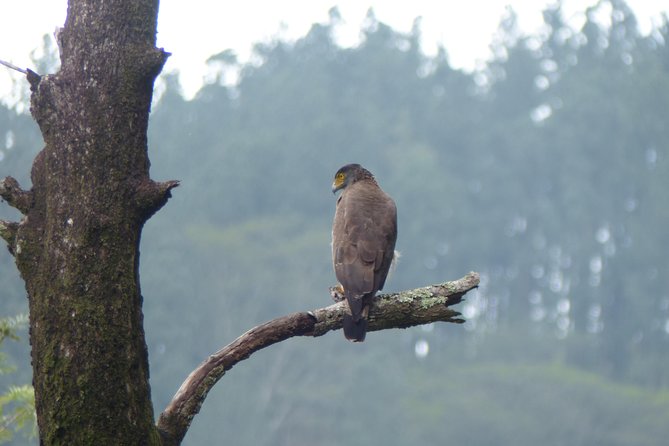
You may also see birds, butterflies, and small animals along the way. No fixed wildlife list is provided, so do not book this as a guaranteed animal-spotting trip. Think of wildlife as part of the walking experience, with the pleasure coming from noticing small details between the larger views.
More Trekking Tours in Sri Lanka
- Knuckles Leopard trail Trek from Kandy
★ 5.0 · 29 reviews - From Kandy: All Inclusive Adams Peak Epic Guided Hike
★ 4.8 · 25 reviews - Knuckles Spice Trail Trek from Kandy
★ 5.0 · 15 reviews
Pine, eucalyptus, and spice forest paths
After the tea sections, the route continues through pine and eucalyptus forest. The change in shade and scent gives the walk a different feel. Forest walking is also welcome after time in open fields, especially if the sun is strong.
The guide is one of the main reasons this section works. The point is not simply to pass trees and plants. You can learn how herbs, fruits, vegetables, tea, coffee, and spices appear before they become familiar items in a kitchen or market. You might smell or taste some of them, depending on what is available that day.
The route then reaches vegetable and spice gardens. This is where the walk becomes more connected to local life. You see food growing near homes and learn how village families use the plants around them. The experience does not present rural life as a staged show. It gives you a chance to meet local people and learn about village culture through the places where people live and work.
Rain can make this part of the walk slippery or muddy. One August outing included heavy rain and leeches early in the route. That is a useful warning, not a reason to cancel. Wear proper trekking shoes, use long socks if you have them, and check yourself after wet sections. A rain jacket belongs in your day pack, even in a sunny season.
The waterfall and natural swimming pool
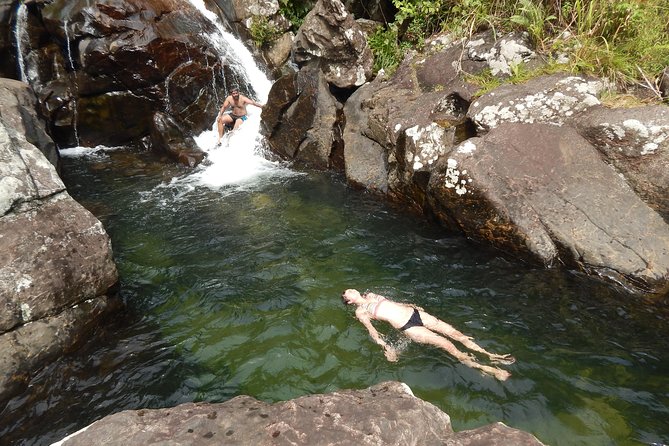
The waterfall stop is the day’s natural break. The route crosses a waterfall and reaches a natural pool where you can swim. The water can be cold, but that is part of the appeal after several hours of walking.
Bring swimwear rather than planning to swim in your walking clothes. A small backpack is useful for keeping wet items separate, though the provided information does not specify changing facilities. Pack only what you can carry comfortably, since you will have the bag with you for much of the route.
The pool is not a polished resort attraction. Expect a natural setting, uneven ground, and outdoor conditions. You should take care around wet rocks and follow the guide’s advice. One person also enjoyed letting small fish nibble at the feet, but this should be treated as an occasional feature of the pool, not a promised part of every visit.
This is one of the strongest reasons to choose this outing over a standard viewpoint stop. You are not just looking at the mountains. You have a chance to cool off in them. If swimming is not your thing, the waterfall still gives you a pleasant pause before the next section.
Rice terraces and the traditional village
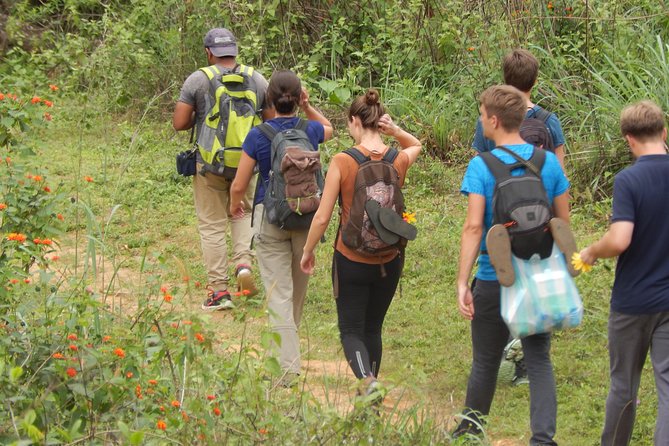
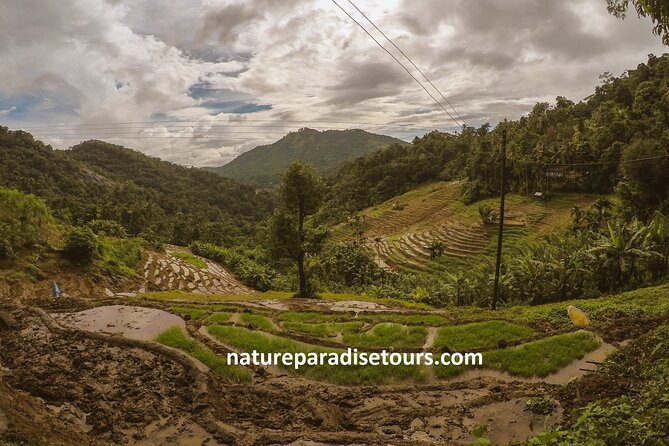
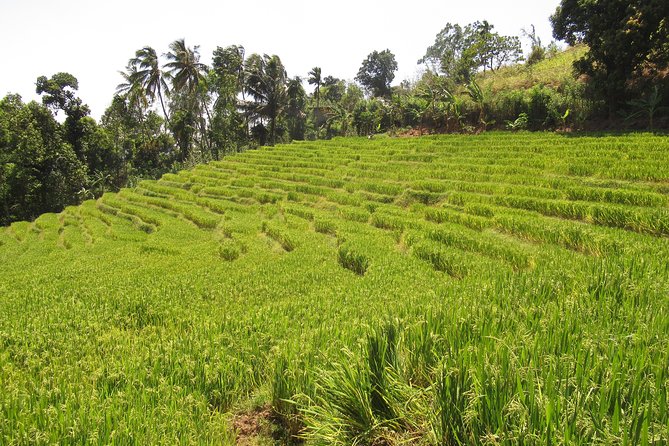
After the forest and waterfall, the route passes through terrace rice fields. These fields create some of the most striking views on the walk, with lines of cultivated land following the shape of the slopes. The scenery changes again from forest shade to open agricultural space.
The rice terraces also explain how the countryside is used. You see more than pretty fields. You see farming shaped by hills, water, and available land. The walk is valuable because it links the mountain environment with the food on the table later in the day.
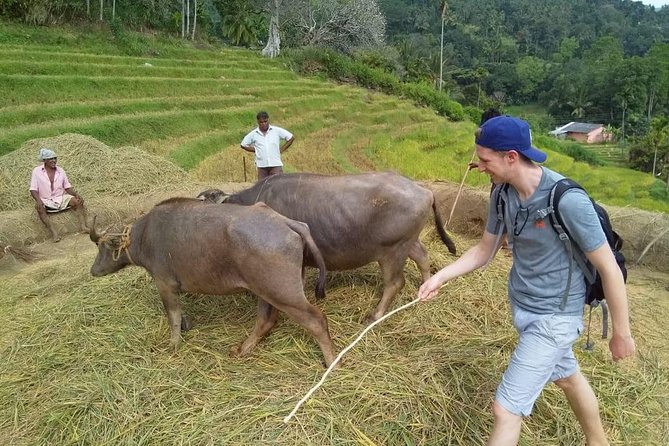
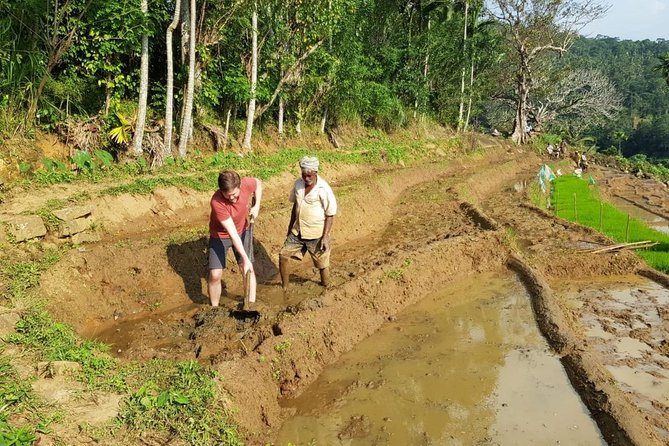
From the rice fields, you enter a traditional village. Along the way, you may see vegetable gardens and spice gardens close to homes. You can meet village people and ask the guide about local customs and daily routines. The experience is not built around a long formal lecture. Information comes in small pieces as you walk, stop, and look around.
Keep your expectations realistic. This is a village visit within a trekking route, not a separate cultural performance or a full-day homestay. You will get a brief but useful window into rural life. If you prefer tours focused only on scenery, this added village time may feel slower. I consider that a strength, but it is worth knowing before booking.
Another trail to compare in Sri Lanka:
- Trek to Little Adam’s Peak and Nine Arches Bridge In Ella
★ 5.0 · 8 reviews - Sinharaja Rainforest Trekking Private Day Trip with Local Lunch
★ 4.5 · 8 reviews - Sinharaja Rainforest: Tour with 5 Waterfalls Trek
★ 5.0 · 6 reviews - Knuckles Leopard trail Trek from Kandy
★ 5.0 · 6 reviews
Lunch with local flavor
Lunch is included, either as a picnic or an authentic village meal. In practice, the local meal is a major part of the day’s appeal. A family-style buffet of rice and curry was served at the end of one outing, with vegetarian food taken into account.
The precise menu can change, so do not expect a fixed restaurant-style selection. The value is in eating fresh local food in the setting where you have just seen gardens, rice fields, and spices growing. It gives the walk a satisfying sense of place.
If you have dietary needs, tell the provider in advance. Vegetarian food was accommodated on one trip, but the supplied details do not promise every possible dietary requirement. Water and snacks are included, which helps on a route of this length, though you should still carry a refillable bottle if you normally drink a lot while walking.
A village lunch can take longer than a quick roadside meal. That is part of the experience, but it also helps explain why the day fills eight hours. The walk is not a race to fit in as many sights as possible.
What the $101 price includes
At $101 per person, this is not the cheapest way to see mountain scenery near Kandy. It is also more than a simple driver-and-viewpoint day. The price includes transport, a specialized guide, entrance ticket, lunch, water, snacks, precautions, and passenger insurance.
The strongest value comes from combining several services in one private outing. You are not paying only for a path through the hills. You are paying for the transfer from Kandy, a guide who can explain plants and village life, a waterfall stop, food, and the organization needed to complete a long route in one day.
The guide makes a real difference here. Without one, the tea fields, spice gardens, and forest plants would mostly be scenery. With someone like Lakmal or Ashoke explaining what you are seeing, the walk becomes more useful and memorable.
Additional services and personal expenses are not included. The information does not list specific optional costs, so ask before booking if you want anything beyond the stated package. Free cancellation is available up to 24 hours before departure, and you can reserve while paying later. Those policies give you some flexibility, especially during a weather-sensitive season.
How hard is the 10 to 15 kilometer walk?
The route is rated smooth medium grade, lasts four to five hours, and drops from about 1,000 meters to 500 meters. The distance is substantial, even if the overall grade is not described as difficult.
You should be comfortable walking for several hours on outdoor trails. Comfortable shoes are essential, and proper trekking shoes are better than casual sneakers. The path may be wet and muddy after rain, and the waterfall section can be slippery.
Bring:
- Trekking or other sturdy walking shoes
- A rain jacket or other rain gear
- Swimwear and a change of clothes
- Sunscreen
- Comfortable clothes
- A small backpack
The altitude range is moderate compared with high-altitude trekking, but the length and weather are the practical concerns. If you dislike wet conditions, muddy paths, or cold swimming water, you may prefer a shorter sightseeing outing.
This experience is not suitable for wheelchair users, babies under one year, or people over 95. No separate suitability guidance is provided for other mobility or medical conditions, so ask the provider if you have concerns about the distance or terrain.
The best season and the weather question
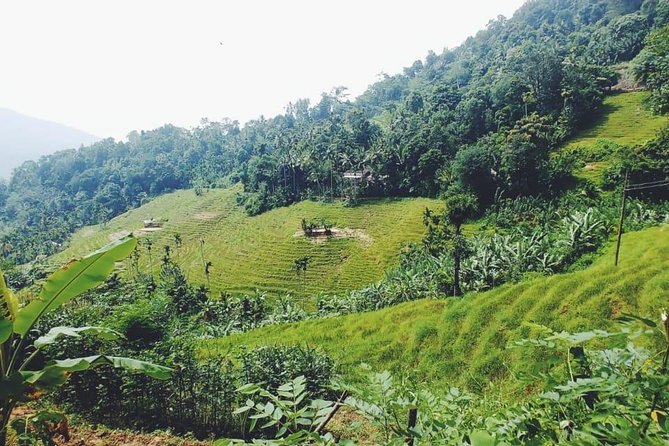
The walk operates in changing mountain conditions. Clear weather can bring wide views over tea and rice fields, while mist may cover the higher points and rain may arrive during the route.
Rain does not automatically spoil the day. Wet forest, waterfalls, and rice fields can look especially atmospheric, and the walk continues through several types of scenery. Still, heavy rain brings practical problems: muddy trails, leeches, damp clothes, and less visibility.
Pack rain gear even if the morning forecast looks good. Keep your phone and other valuables protected. Apply sunscreen as well, because cloud cover does not remove the need for sun protection.
A few basic preparations make a large difference. Wear shoes with grip, keep your backpack light, and bring dry clothing for after the swim. You will enjoy the route more if you are ready for both sunshine and rain rather than hoping for one perfect forecast.
Who should book this Knuckles trek?
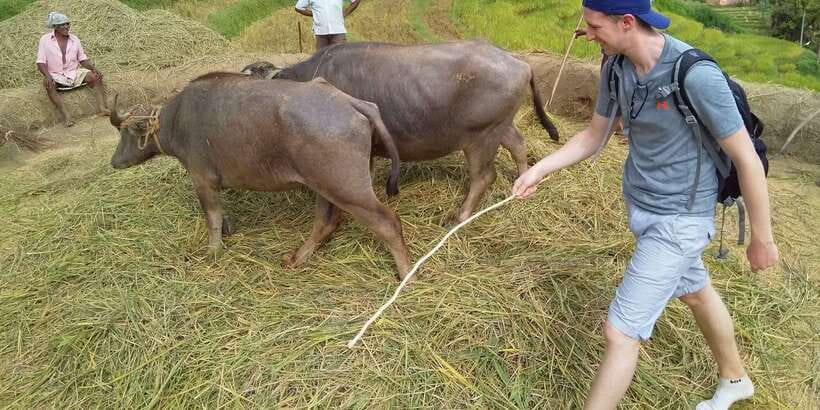
I would choose this tour if you want an active day with variety. You get mountain views, tea country, forest, wildlife sightings, a waterfall, a swim, rice terraces, gardens, village life, and a meal. Few parts of the day feel like a repeat of the last.
It suits couples, friends, and families with older children who can manage a medium-grade walk. A private group also makes it a good choice if you want to stop often for photographs or ask many questions.
It is less suitable if you want a short and easy stroll, guaranteed clear views, or a highly polished attraction with changing rooms and fixed facilities. It is also not the right pick if you dislike local food, rain, mud, or the possibility of leeches.
Should you book the Knuckles Spice Trail Trek?
Book it if the idea of combining nature, farming, and village life appeals to you. The waterfall swim and home-cooked rice and curry give the day a clear sense of place, while the guide’s explanations make the plants and gardens worth your attention.
At $101, the outing earns its price through the private transport, guide, food, entrance, and long route. Go prepared for weather and a full day on your feet. If you do, this is a strong choice from Kandy for seeing more than a scenic viewpoint and getting a closer look at how mountain communities live.
FAQ
How long does the Knuckles Spice Trail Trek take?
The activity lasts about eight hours. Pickup from Kandy is scheduled around 7:00 to 7:30 in the morning, trekking begins around 9:30 to 10:00, and the trek ends around 2:30 to 3:00.
How far do you walk?
The distance is about 10 to 15 kilometers, with four to five hours of trekking. The route is rated smooth medium grade.
Is swimming included?
The route crosses a waterfall and reaches a natural swimming pool where you can swim. Bring swimwear and a change of clothes.
What food is included?
The price includes either a picnic lunch or an authentic village lunch. Rice and curry may be served, and vegetarian food can be accommodated, as shown by the available tour information.
Is transport from Kandy included?
Yes. Transport from Kandy and the return journey to Kandy are included. The transport time is about 1.5 hours.
What language does the guide speak?
The live tour guide speaks English. The group type is private.
Latest treks added in Sri Lanka
- Waterfall Trekking in Knuckles Mountain Range★ 5.0 · 2 reviews
- Knuckles Mountain Range Hiking and Trekking Day Tour From Kandy Hotels★ 5.0 · 5 reviews
- Pekoe Trail Stage 1- Scenic Trek from Hanthana to Galaha★ 5.0 · 3 reviews
- Overnight Adventure Trekking in Knuckles★ 5.0 · 5 reviews
- Knuckles Mountain Range: Hidden Waterfall Chain Trek★ 5.0 · 2 reviews
- Trek to Little Adam’s Peak and Nine Arches Bridge In Ella★ 5.0 · 8 reviews
- Sinharaja Rainforest Trekking Private Day Trip with Local Lunch★ 4.5 · 8 reviews
- Sinharaja Rainforest: Tour with 5 Waterfalls Trek★ 5.0 · 6 reviews
Kandy Trekking Tours, compared.


Knuckles Mountain Range Hiking and Trekking Day Tour From Kandy Hotels
Read our review →
Pekoe Trail Stage 1- Scenic Trek from Hanthana to Galaha
Read our review →
Knuckles Mountain Range: Hidden Waterfall Chain Trek
Read our review →Browse the lists this tour appears in